


CANAL + ADVERTISING has just published a study on media consumption and brand expectations conducted by VOXCO Online from March 25 to April 10 among 1,000 Canal+ Africa subscribers aged 15 to 55 in eight French-speaking sub-Saharan countries (Senegal, Ivory Coast, Cameroon, DR Congo, Gabon, Mali, Burkina Faso, and Congo).
Key findings
1/ Television is being consumed at a very high rate during this health crisis.
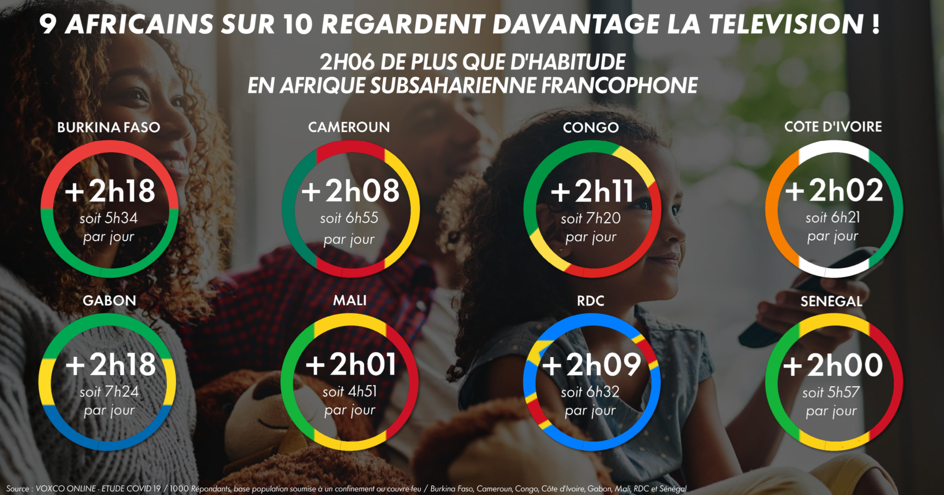 2/ Unsurprisingly, news programs are currently the most watched on TV (+71%), followed by movies (51%) and series (47%), which is reflected in a sharp increase in the channels marketed by CANAL+ADVERTISING (CANAL+, Novelas TV, Nollywwod TV, and France 24 in particular).
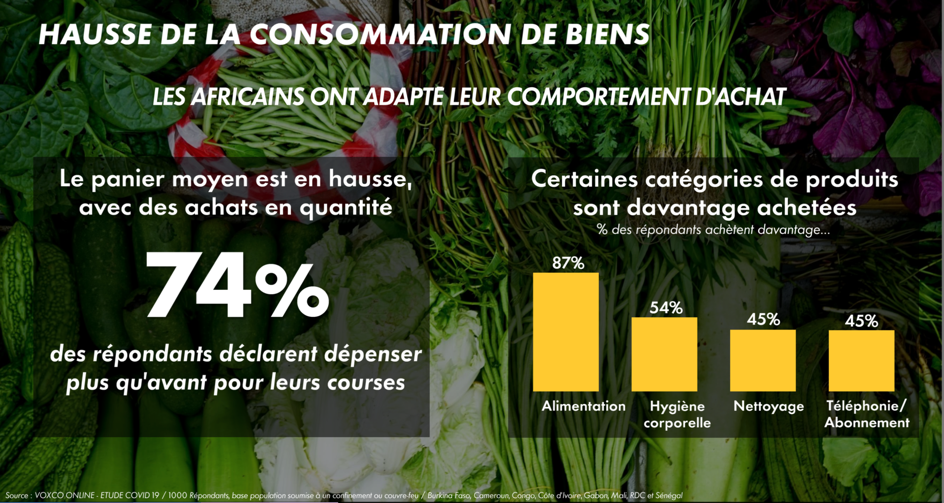
3/ In terms of consumption, the food sector and, to a lesser extent, the hygiene sector are the most heavily over-consumed compared to a "normal" period.
 4/ Respondents expect brands to adapt their advertising messages by highlighting initiatives to participate in the collective effort, to inform and reassure with advice and prevention messages, to create connections on social media, and, in general, to be creative.
http://www.canalplusadvertising.com/medias/etude-covid-19-afrique-subsaharienne.pdf
KANTAR has just published the results of a global study on consumer attitudes and media habits during the COVID-19 pandemic, which show similar results.
Conducted among more than 25,000 consumers in 30 countries, this study provides some universal conclusions about media consumption and expectations of brands
1/ As countries sink deeper into the pandemic, media consumption is increasing across all home communication channels. In the later stages of the pandemic, web browsing increases by 70%, followed by (traditional) television, which increases by 63%, and social media engagement, which increases by 61% compared to usual usage rates.
WhatsApp is the social media app that has seen the biggest increase in usage, as people seek to stay in touch. Overall, WhatsApp usage has increased by 40%.
2/ Traditional news media (radio, television, and newspapers) are considered the most reliable source of information, with 52% of people identifying them as a "trustworthy" source, while social media platforms are considered a trustworthy source of information by only 11% of individuals.
3/ Consumers expect the brands they choose to care first and foremost about their employees. A significant minority of consumers want brands to support hospitals (41%) and help the government (35%).
4/ In the four sub-Saharan African countries studied (Senegal, Ivory Coast, Cameroon, Ghana), consumers expect brands to have an impact on society in general and the community by taking action to build a better world:
Main expectations of companies and brands (in %)
Show us that we can overcome the crisis together:
Senegal: 35% Cameroon: 34% Ivory Coast: 33% Ghana: 15%
Brands must therefore create meaning, help overcome the crisis, and shape a better future. This means amplifying the values of community, cooperation, generosity, dialogue, simplicity, and inclusion.
According to this study, consumers do not expect brands to stop advertising, even though many brands are considering "stepping back" for economic reasons. Kantar estimates that a six-month absence from television would result in a 39% reduction in total brand awareness linked to communication
.
Read also: Television, the main source of information for the public on the
coronavirus
Read also: McCANN Dakar: How can brands be useful during this pandemic?