


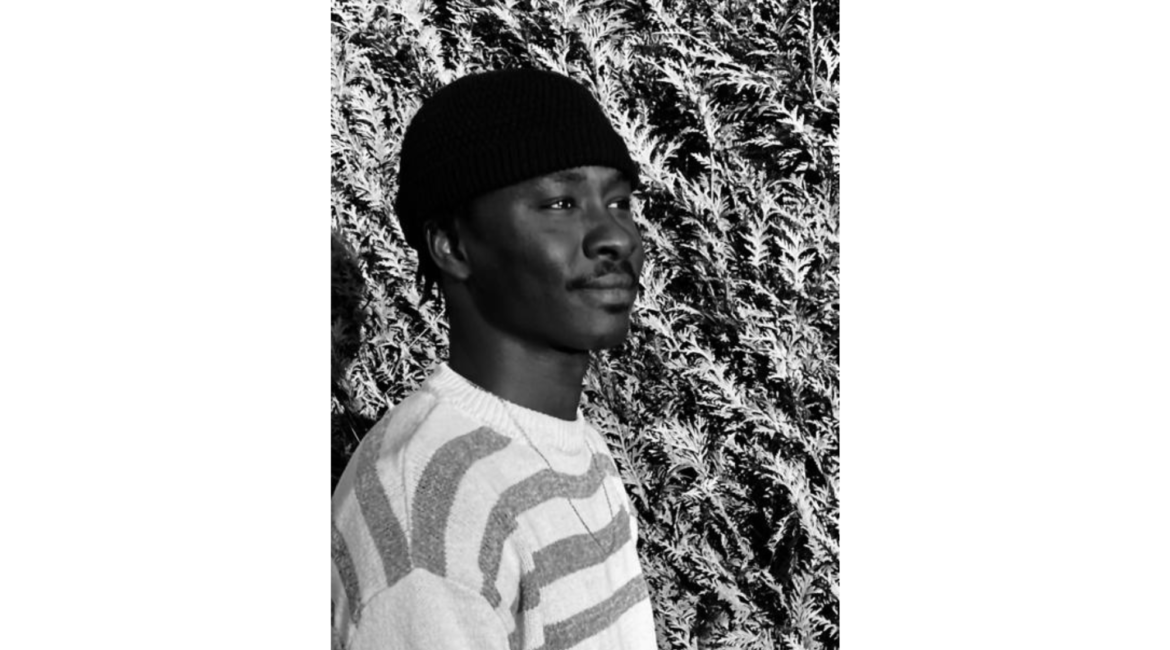
Can you tell us about your job?
As a film enthusiast, I have been working as a director and producer since 2016. I film contemporary society
in my country, Senegal, through short fiction films and
documentaries. When I started out, I worked on a number of film projects, including
five short films that were selected for several festivals, the most recent of which is entitled "Journée
noire" (Black Day). This film deals with police violence. Shot in Dakar, this project was a
real springboard for my career. I also made a name for myself with a documentary about the
daily lives of Uber drivers of Senegalese origin working in France.
How did you learn these filmmaking skills?
I got started in the film industry thanks to an association called "Ciné banlieue."
It's an association created by filmmaker Abdel Aziz Boye, dedicated to training a new
generation of Senegalese directors. After learning from him and other professionals in
the field when I was starting out, I am now a trainer with this association myself.
After working on several film projects, I became interested in production
. So I decided to study at university, but I quickly realized that there were very few places
available and that most of them were reserved for European students. I
was also made to understand that in order to access this type of training, I needed to have some
initial experience in production. So, in early 2020, I decided to return to Senegal to embark
on the great adventure of production and train myself surrounded by professionals and friends in
the industry. That's how I started co-producing all my films on my own. One of
my flagship projects is called "La nuit des Rois" (Twelfth Night), which is the result of a co-production between France,
Canada, Ivory Coast, and Senegal.
This experience in international production and co-production led to my selection
for this training program in the production profession, between 2020 and 2021, in France and
Germany.
In your work as a producer and director, what are the main difficulties you face on a daily basis?
Whatever the difficulties, I try not to let them get me down, but as a director, I think
the biggest challenge is whether or not you have the ideal environment for writing a
project and tailored artistic support. As a producer, the main difficulty
is financing. In Africa, that's difficult. For a feature film, we often hope
to benefit from an international co-production in order to obtain attractive financing. In Senegal, we have tried to finance our productions, but it remains very complicated
despite the efforts made in recent years by the Senegalese government. A budget is
dedicated to supporting film projects, but it is very difficult to access this
funding in time, particularly due to the administrative burden imposed on application
files.
From your early days to the present, how do you see the
professions of producer and director evolving and developing in Senegal?
It is true that there are more and more producers and directors in Senegal
today, but it must be said that these professions remain very inaccessible. Producer
training, for example, requires you to carry out projects on your own and jump in at the deep end
without much support, from development to the final stages of a film. That's one of the
reasons why I got into production. There is real creativity in Senegal and
many talented people are making remarkable efforts to keep local cinema alive, but production
remains a real challenge, largely dependent on international funding and to the detriment of our
independence in terms of creativity. We now need to acquire projects and bring them
to life together and collectively, without relying solely on international funding.
How do you see the future of training for careers in cinema, which remains a real challenge
today for the development of the sector?
For me, the best school is still hands-on experience and training in the field, but it's clear that we need
to inspire the next generation. I am still young, and my only advice for inspiring and encouraging future
talent to dream, aspire, and do better than anything I have been able to achieve is to "do." There
are still very few structures where you can draw inspiration from the experiences of the most seasoned professionals,
especially in the field of production. I work at the Yennenga Center, created by Alain Gomis, which
is doing remarkable work in training young people, but we all
share the same opinion: beyond artistic development and production, there is a
real problem with post-production. It is costly and requires real expertise.
Alain Gomis aims to develop ways to train young people in
post-production. We hope that in a few years' time, we will no longer need to systematically
resort to international collaborations to create and develop films.
How do you see the audiovisual and film production sector evolving?
In terms of audiovisual media, it has been a great success. Today, thanks to the boom in TV
series, Senegalese people can finally consume Senegalese content produced locally. Some production
companies have even managed to find their own financing model thanks to
digital technology. This is an extraordinary development that has not yet reached film
production.
What major projects are you currently working on?
I am currently involved in a major co-production project for Alain Gomis' film "Dao," which has already been shot
and is currently in post-production. At the same time, as a writer, I am also working on my
own feature film project and am finishing shooting my short film "Fagadaga."