


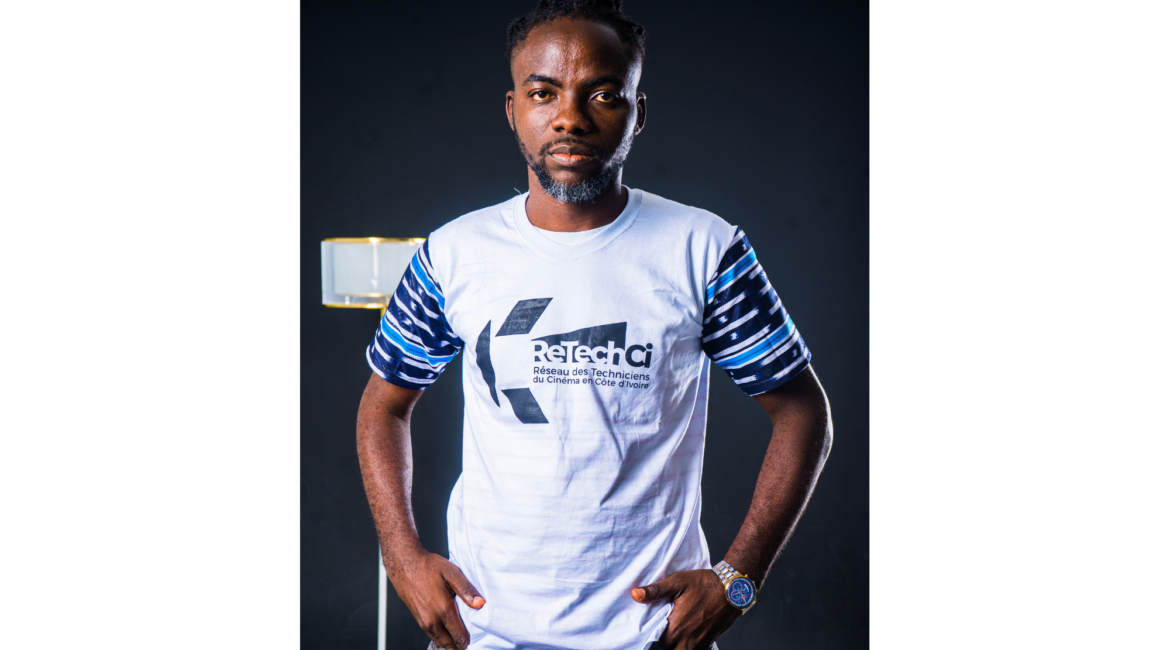
Jamel Basiru is a filmmaker, editor, and VFX artist based in Abidjan, Ivory Coast. He has been working in the industry for seven years, on feature films and series. After graduating from an audiovisual communications school, he chose to teach himself the craft of filmmaking. He started out in television as an editor. Today, he works as an assistant editor on the project called "Niabla," a CANAL+ ORIGINAL series led by the illustrious Alex Ogou.
What are the main challenges you face in your job today?
Audiovisual and film production is currently booming in French-speaking sub-Saharan Africa, particularly in Côte d'Ivoire. However, there is still a significant lack of training in the sector's professions. Most local producers are not sufficiently trained and have little knowledge of how the sector works. Requirements are not being met, which has an impact on the quality of the work. For example, on a project, it is rare for us to organize a preparatory phase to review the script before editing and post-production, even though in our line of work, we need to know the script and have an overall vision of the project. In an ideal world, there should be consulting in post-production. It is important that all the professions involved in the project are able to discuss it. In the United States, this type of profession exists and provides an overall artistic vision of a film or series. It works closely with all professions, including in the final phase of a project's production.
The lack of funding is also a real challenge. How does this affect your work?
The lack of funding is also problematic, particularly in terms of equipment. There is a whole range of new, modern equipment that is essential for us to do our jobs properly and that enables us to evolve from a technical standpoint. In Côte d'Ivoire, producers are not yet in the habit of setting aside budgets for post-production. We are all affected by these funding issues, which are insufficient and prevent us from competing with international standards. Yet we have a lot of talent here in Côte d'Ivoire, capable of producing great projects. Just look at the series Invisibles, directed and produced in Côte d'Ivoire.
It is important to understand that a lack of funding for a project has repercussions for all the professions involved in the entire production chain. This does not only affect production. It is a real challenge if we want to showcase our talents and our productions.
You are the executive director of the Network of Cinema Technicians in Côte d'Ivoire. Can you tell us about this initiative?
In response to all these issues, we decided to create an association to promote technical professions in the film and audiovisual industries in Côte d'Ivoire and internationally. Our mission is to defend the rights of technicians because there are no regulations in force governing cinema in the country. In 2016, work on the subject was initiated, but to date, the draft decrees have not been implemented. We are campaigning to obtain legal status for our professions. We do not enjoy intermittent employment rights, nor even legitimacy. Finally, we are also raising awareness of the duties of film technicians, because while we are demanding rights, we also have duties to fulfill. We are therefore engaged in a process of professionalizing these still little-known professions. We will soon be organizing training workshops to raise awareness of these issues. Thanks to a partnership, we will also be organizing the visit of several experienced French technicians to train our local technicians.
How are you organized?
This association is chaired by Jean-Aristide DICO. The board of directors is composed of 13 members and aims to set the association's guidelines and prioritize objectives to be achieved during its term of office. To achieve these objectives, RETECHCI is led by the Executive Committee, chaired by Mr. Jamel Basiru. This committee is responsible for designing appropriate strategies to achieve the objectives set and implementing them.