


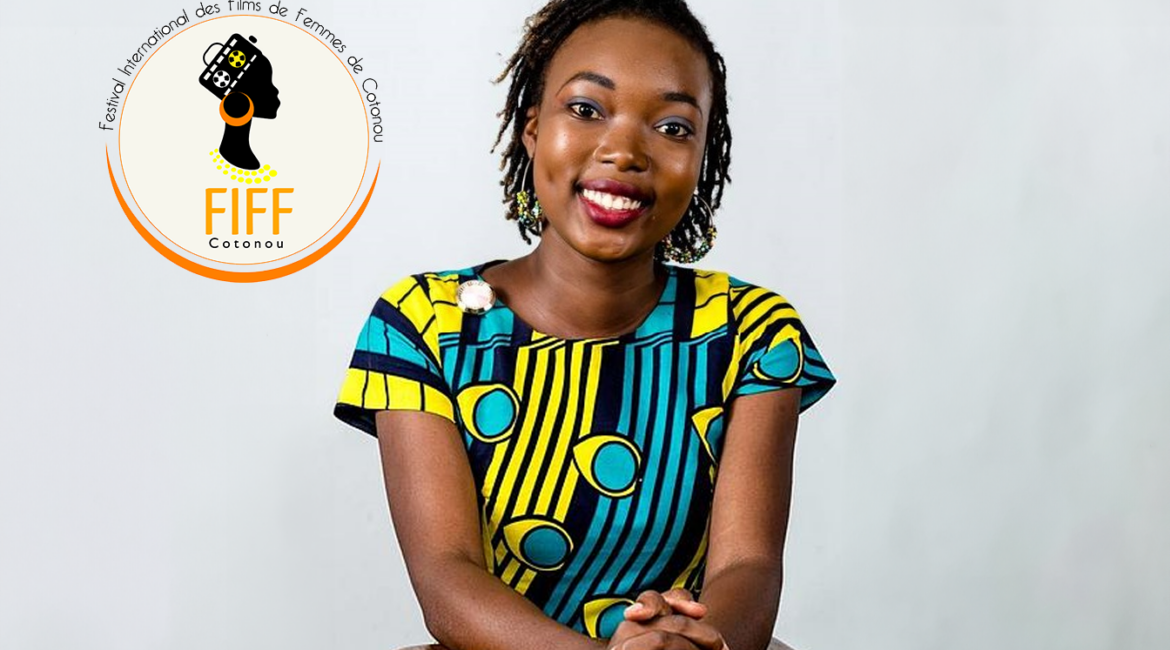
After studying journalism for three years, Cornélia quickly turned her attention to cinema. She chose to train in filmmaking in Benin before directing three short documentaries. She then developed her production skills by working on the Black Santiago series, the first original CANAL+ production filmed in Benin.
You have had an unusual career path. What are your main activities today?
Today, I work for STEPS, a South African organization specializing in documentary film production. At the same time, it organizes the Cotonou International Women's Film Festival, the latest edition of which took place from February 20 to 24.
Can you give us an overview of the Cotonou International Women's Film Festival?
This festival is an integral part of my blog project EcranBenin, created in 2017 to showcase Beninese cinema. As a feminist, I felt compelled to dedicate this festival to talented women working in the film industry in Benin. Through this event, we aim to promote and raise the profile of African films and films from the diaspora made by women. Out of 300 films received this year, we selected 18 that we screened during this 2024 edition.
A few days after the close of this edition, what conclusions can you draw?
The results are very positive, as we welcomed more than 5,000 people this year. Many say that Africans don't want to go to the movies, but here's the proof! There is a real interest in cinema among Beninese people and young Beninese people. We were also fortunate to have a talented patron this year: Angela Acquereburu.
You campaign to promote African cinema more widely, and Beninese cinema in particular. In your opinion, is Beninese cinema sufficiently promoted locally/internationally?
It is clear that cinema has great potential in Benin, particularly because Benin has a rich history that needs to be told and highlighted through films. One need only look at the recent success of Mati Diop, a French-Senegalese-Beninese documentary film that won the Golden Bear at the 2024 Berlinale. Talent is growing, but we still need to make efforts to promote local cinema.
Actresses, screenwriters, directors, producers… Women still occupy a minor place in the African film industry. Why is this? What needs to be put in place or changed to reverse this trend?
In cinema, but not only there, women still occupy a minor role and continue to face many prejudices. But things are changing, with more and more women breaking out of their mold and daring to pursue careers in the world of cinema. This is what we want to celebrate in this festival dedicated to women in cinema.
Have you already thought about the outline of the next edition?
With the success of this latest edition, we have high expectations for the next one. And big ambitions. We will start working on our roadmap, but one thing is certain: the next festival will take place in February 2024 in Cotonou!