


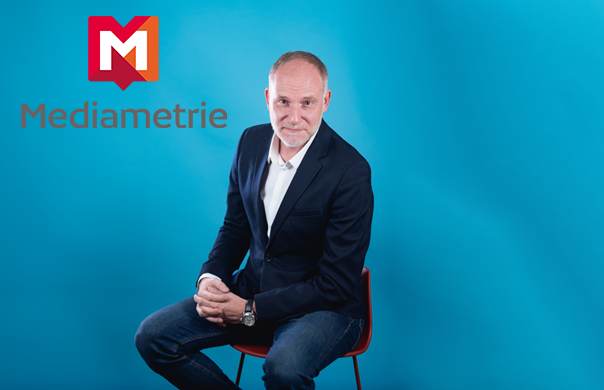
Médiamétrie has just released its TV/radio audience figures for Côte d'Ivoire for the first half of 2023. This gives us an opportunity to talk to Arnaud Annecbique, Director of MetricLine*, about the main developments in audience figures and how they are measured since the launch of Ivorian DTT channels in 2019.
*MetricLine is the department responsible for marketing Médiamétrie's measurement technologies and expertise internationally for television, radio, and the internet.
Médiamétrie has been measuring television and radio audiences in Côte d'Ivoire for over 10 years, but things have accelerated significantly with the advent of DTT.
Where are you today?
In recent years, we have taken action in many areas to improve our survey system in Côte d'Ivoire: we have added questions that allow us to work on consumer targets in addition to socio-demographic targets. For example, we can find out the TV, radio, or internet audience of soda consumers or buyers of hygiene products.
We increased the sample size from 1,600 to 2,000 interviews per quarter and increased the frequency of publication of results, with the possibility for TV channel bosses to have access to monthly interim results exclusively reserved for them. We also revised the geographical scope of the measurement to cover, in addition to Abidjan, the cities of Bouaké, San Pedro, Korhogo, and Daloa, which gives us an almost complete representation of the country's geo-cultural sensibilities.
We can say that Côte d'Ivoire now has the most sophisticated reporting tool on the continent in the form of the Médiamétrie system.
Who are your main subscribers?
Beyond the TV channels and radio stations themselves, which obviously subscribe to the study, we have expanded our subscriber base because we work with almost all media agencies as well as large international communications agencies, whether they are pan-African, European, or English-speaking. To meet the demand of these subscribers, we have made a real effort on the issue of media plans: we now work with all the IT solutions available on the market in order to feed the media planning tools used by agencies.
And what about advertisers?
We feel the need for a professional organization of advertisers that can serve as a genuine point of contact. We believe that there is a need to address the training gap among employees at advertising agencies when it comes to media issues. Perhaps a specific program should be developed in this area. Médiamétrie is, of course, willing to actively participate in supporting such an initiative.
Ivorian advertisers seem unaware of the power and effectiveness of television. Broadcasters, public authorities, and agencies have a vested interest in supporting the creation of a strong advertisers' organization, as the weakness of the TV advertising market poses a threat to the financing of broadcasters and audiovisual production.
What are the key figures for the first half of 2023?
In the first half of 2023, 98% of Ivorians watched TV every day for more than 4 hours on average. More than 61% of viewers watched one of the DTT channels every day.
57% of digital terrestrial television viewers are women, and two-thirds of 25-34 year olds watch at least one digital terrestrial channel every day.
These are just a few examples of what can be obtained from the available audience data, which allows for highly detailed and targeted processing.
You have been tracking viewership of Ivorian DTT channels since their launch in 2019. What do you consider to be the most notable developments?
Media consumption has increased significantly, from just under 90% of the cumulative audience in 2018 to 98% today. Listening time has remained stable, but there has been an overall increase in media consumption due to the arrival of new Ivorian DTT channels.
It makes sense that an increase in supply would lead to an increase in consumption. But has the share of Ivorian channels also increased significantly over the past five years?
In 2018, RTI1 and RTI2 accounted for between 18 and 20% of total TV viewership. Today, all Ivorian channels account for approximately 40% of total television viewership.
Overall, the creation of new channels has had the effect of rebalancing the share of Ivorian channels in relation to foreign and international channels as a whole. This change has not affected the audience share of the most powerful international channels, which have maintained their level, but has instead been to the detriment of channels with low audience shares that were previously watched more by default than by choice.
More specifically, the public service broadcaster, with its three channels RTI1, RTI2, and La 3, maintained its position relative to 2018, while the new private channels are growing steadily. NCI has won over a new and loyal audience thanks to its coverage of the World Cup, which has enabled it to steadily increase its audience share. Life TV is also growing steadily from one wave to the next.
Finally, the news channel is beginning to establish itself in the Ivorian landscape.
7 info began broadcasting well after the other digital terrestrial television channels, and despite its focus on a subject that does not encourage long viewing times, it has developed a significant and growing audience.
According to the latest results published by Omedia, the Ivorian advertising market is not doing very well. What do you think should be done to improve the situation?
Television, as we have just seen, is a powerful medium that reaches the entire population. It is also an effective medium that is widely used for this reason by advertisers in countries around the world. Contrary to popular belief, it is not an expensive medium, as it is possible to run cost-effective campaigns with appropriate media planning. Beyond audience measurement, there is certainly work to be done to educate advertisers and convince them of the value and effectiveness of TV campaigns.