


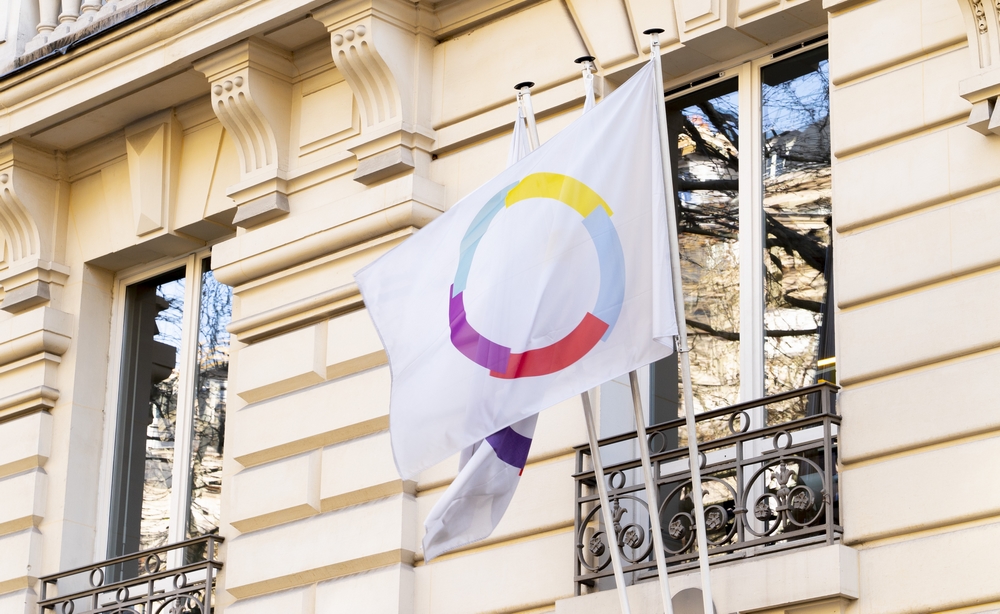
The new governments in Mali, Niger, and Burkina Faso officially left the International Organization of La Francophonie (OIF) between March 17 and 18, 2025, according to coordinated announcements by the three governments.
This decision, which will take effect after a six-month notice period, will mainly result in the end of educational, cultural, and professional programs funded by the OIF (training for young people, support for festivals such as FESPACO, etc.).
Furthermore, the status of French as an official language has been called into question.
since the advent of military regimes in these three countries.
In MALI: While French was the official language in the 1992 Malian constitution, the new constitution introduced 13 new official languages: Bambara, spoken by 52% of the population, but also Bomu, Bozo, Dogon, Fulani, Soninke, Songhay, Senufo-Mamara, Syenara, Tuareg, Hassanya, Khassonké, and Malinké, with French becoming the "working language."
In BURKINA FASO since 2023, the official language has been Mooré, spoken by nearly 75% of the population, and French has become the language of work, administration, and education.
Apart from Mooré, Fulfulde (Peul), Dioula, and Bissa are the other languages considered to be the main ones, among more than 60 recognized national languages.
In NIGER: the new Charter for Rebuilding promulgated at the end of March 2025 establishes Hausa as the national language, with French, previously the official language, becoming a working language, alongside English.
Apart from Hausa, nine other languages are recognized as "the spoken languages of Niger" according to the Charter: Zarma-Songhay, Fulfulde (Peul), Kanouri, Gourmantché, Arabic dialect, Tamajaq (Tuareg), Tasawaq, Toubou,
What impact will this have on French-language media?
Decisions in recent years to give national languages a greater role in legislation and administration mark a symbolic break with France, but the impact on the already very small number of French speakers in these countries is likely to be modest in the short and medium term.
Today, just under 20% of the Malian population speaks French; this rate is 22.8% in Burkina Faso and only 13% in Niger.
Nevertheless, for French-language media, the need to offer programs in the most widely spoken languages of these three countries may prove essential in order to continue exercising soft power in these countries.
Several years ago, the CANAL+ group began developing channels in local languages and launched two channels in April 2024: MANDEKA (channel 66): dedicated to series and theater in Bambara and Malinké (Mandiaga), covering Mali, Senegal, Guinea, Ivory Coast, Burkina Faso, etc. and PULAAGU (channel 67), which offers content in Pulaar (Fula), targeting Fula communities in Senegal, Mali, Mauritania, Guinea, Burkina Faso, Cameroon, and Niger.
Furthermore, subtitling programs may be another solution, since most African languages have a written form based on the Latin alphabet and artificial intelligence tools that make this "easy" to implement.
To test this topic, and for those who understand both languages, here is the translation of the first paragraph of this article by webtran.fr.
In Bambara (which uses 4 specific characters):
The governments of Mali, Niger, and Burkina Faso are working together to ensure that French is not marginalized in the region.
Mali: According to the 1992 Mali Constitution, French is the official language, but by 2023, the constitution will recognize 13 languages as official, including 70 regional languages: Bamanankan (52% of the population), Bomu, Bozo, Dogonkan, Fulfulde, Soninkekan, Songhaykan, Senoufo-Mamara, Syenara, Tamasheq (Tuaregkan), Hassanya, Khassonké, and Ani Maninkakan. French is the official language.
In Hausa:
After the new governments of Mali, Niger, and Burkina Faso took power, the French language was replaced.
In Mali: When the 1992 constitution of Mali was adopted, French was the official language, and the new constitution established 13 of the 70 languages spoken in Mali as official languages: Bambara (spoken by 52% of the population), Bomu, Bozo, Dogon, Fulfulde, Soninke, Songhay, Senoufo-Mamara, Syenara, Tamasheq (Tuareg), Hassanya, Khassonké, and Malinke. French became the "working language."