


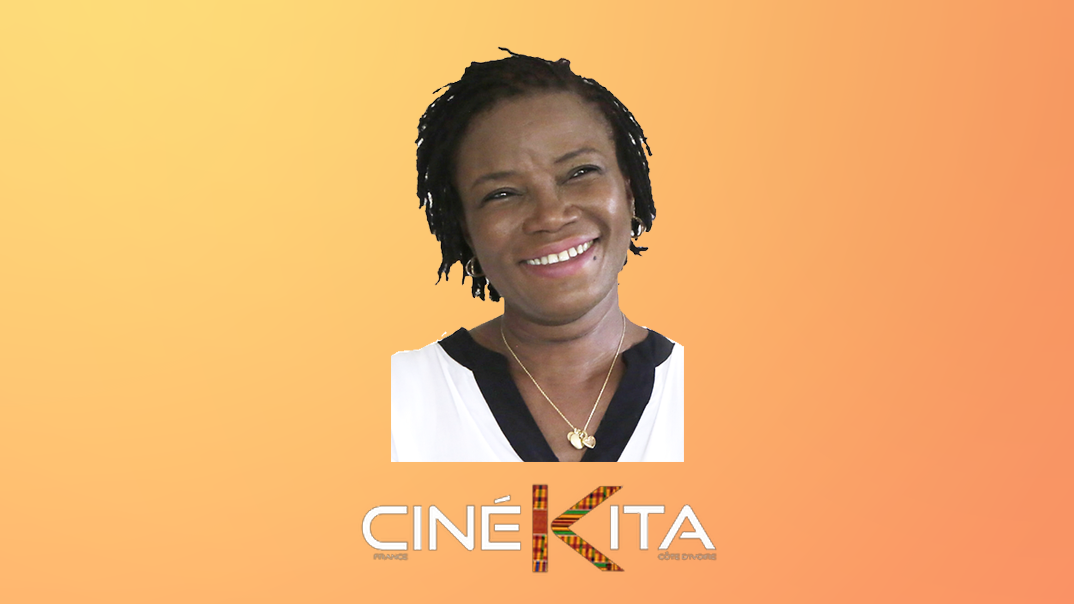
(Interview by Edouard Char for Adweknow at MIPCOM)
Hello, Madéka Kouadio Timmerman. You are an Officer of the Ivorian Order of Merit and the founder of Cinekita in France, then in Côte d'Ivoire. Can you tell us about your career?
Madéka Kouadio Timmerman: Hello. I founded Cinekita in Paris in 1996. At first, it was a very small company, almost like a family business. I worked from my bathroom! But we managed to grow, moving from a 15-square-meter space to a 90-square-meter space. Today, Cinekita is based in Puteaux in the Hauts-de-Seine department. In 2012, I decided to return to Côte d'Ivoire to found Cinekita Côte d'Ivoire.
What are Cinekita's main activities?
MKT: We are an audiovisual company. We do dubbing, subtitling, and post-production. In Ivory Coast, we have also added a training dimension. When I arrived, there were practically no dubbing studios. Many African producers came to France to do their post-production, which seemed nonsensical to me. I wanted to bring this expertise directly to Côte d'Ivoire, and since then, we have been training adapters, technicians, mixers, and actors. Today, our team in Côte d'Ivoire is completely autonomous.
Is this a reflection of the growing desire in Africa to produce locally?
MKT: Absolutely. There is a real desire to produce and consume African products. We see this in the rise of diasporas returning to Africa to bring their skills with them. The European market is saturated, and major players such as Disney and Netflix are turning to Africa, which proves that there is immense potential on this continent.
In terms of technology, what is your view on artificial intelligence (AI) in the audiovisual sector?
MKT: For me, AI is a development tool. It will never be able to completely replace humans. We already use it to speed up certain processes such as subtitling, but a human eye is still needed to check and adjust.
Do you think AI could one day replace actors?
MKT: No, I don't think so. Maybe for small YouTube productions, but for larger projects, the human voice remains irreplaceable. Even if AI could imitate an actor's voice, it couldn't reproduce their acting or emotions. Human warmth is irreplaceable; it's essential in professions such as voice acting.
How does Cinekita Côte d'Ivoire compare to Cinekita France in terms of revenue?
MKT: As I said, today Cinekita Côte d'Ivoire is completely autonomous. At the beginning, Cinekita France helped it a lot, but now it is developing on its own. The two entities work independently, although Cinekita Côte d'Ivoire is still attached to the parent company in France.
Do you have plans to expand into other African countries?
MKT: Yes, that's something we're considering. At the moment, we're based in Ivory Coast, but we've had requests to provide training and develop our expertise in other French-speaking countries such as Benin, Togo, and Cameroon. Training is essential for us.
You also work with Canal+. How do you see their role in Africa?
MKT: Canal+ has been one of our biggest clients since the beginning. We have been working together for many years, both in France and in Ivory Coast. They have contributed a lot to Africa, particularly in terms of training, and we continue to collaborate closely.