


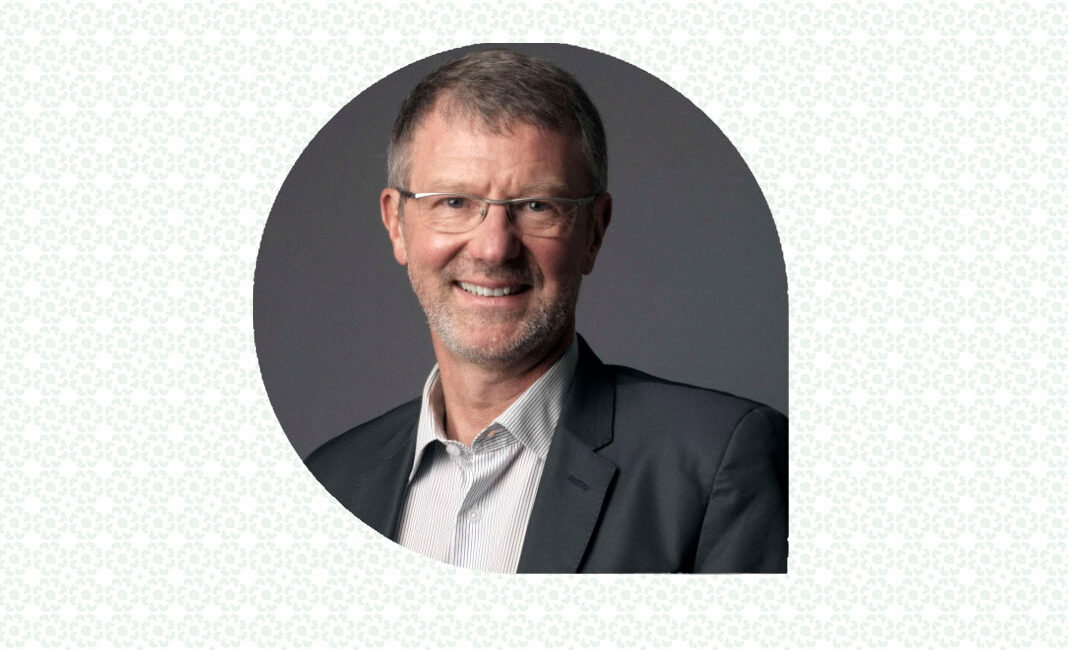
Dominique Guihot is Chief Executive Officer and principal shareholder of Africa Media, the company that publishes Africa N°1 Paris.
Dominique Guilhot is actively preparing to launch a pan-African radio station based in Abidjan. He shares his vision and plans with us.
Africa No. 1 is an iconic brand in France and Africa that has experienced many ups and downs over the years. What is its situation today?
Africa No. 1 was created in 1981 with French (SOFIRAD) and Gabonese funding. It was based in Libreville (where it still is today) and broadcast on shortwave with a pan-African focus. When Africa No. 1 arrived in France, for legal reasons related to the Carrignon law, it was necessary to create a second company under French law that was independent from the first. It was this company, Africa Media SA, that I bought in 2000 from SOFIRAD, which wanted to divest itself of its private media assets. The original company, Africa No. 1 Gabon, became part of the Libyan Arab Jamahiriya in 2007. It now only broadcasts in Gabon on FM and has been in receivership since 2011. I still own 6% of the company's capital.
You have applied to the High Authority for Audiovisual Communication (HACA) for a radio frequency in Abidjan, which will serve as the starting point for your pan-African project. Why are you interested in Africa today, and what are your ambitions?
First of all, we believe that now is the right time to do so because private broadcasting in general, and radio in particular, are undergoing significant changes in Africa. There are now new concepts, new operators, and international experts such as Lagardère and TRACE who have ambitions to expand throughout Africa. It was paradoxical that a radio station like AFRICA No. 1, which found its audience among African cultures in Paris, had no ambitions on the continent itself.
There is still room for this pan-African idea in terms of culture and sports, but also in terms of politics, because our listeners are interested in news from across the continent, not just news from their own country. All the work we have done in Paris over the past 17 years could be extended and enriched on the continent.
Doesn't RFI already occupy this territory?
RFI undoubtedly occupies a very important place in the radio landscape: it has found its pan-African audience, as evidenced by its audience figures, but it remains a sovereign radio station broadcasting from France to Africa. Our goal will be, alongside RFI, and undoubtedly modestly at first, to offer an alternative that, by comparison, will have both feet in Africa (which is why we set up our company in Abidjan) and will be essentially run and designed by African teams on the continent.
What is your development plan?
To achieve this, we want to obtain frequencies in around 20 capitals of French-speaking countries and develop partnerships with major stations in other major cities that are in line with our editorial policy.
Your model is based exclusively on advertising. Do you think the advertising market is growing enough to accommodate all these new initiatives?
Before putting together our proposal, we conducted an advertising market study in Abidjan, and the results were quite encouraging. But it's true that there is a question mark hanging over the subject, and that not everyone who is supposed to make a living from advertising is succeeding.
I fundamentally believe that the more credible publishers there are, the more the media will benefit in terms of image and financially. I am convinced that we can work together to develop a common strategy and a code of ethics on compliance with general terms and conditions of sale, on transparency and reliability in marketing, and on the collective promotion of the media.
Do you think that Ivorian publishers are ready to take joint action?
Everyone can benefit from this: if 10 players talk to each other to promote radio as a medium, they will help it grow, but if everyone works independently with scattered marketing methods, we will not succeed.
Today, I am convinced that radio is undervalued: it is a mainstream medium with a significant impact that is part of people's daily lives and is highly effective.
I have experience of what we have done collectively with Les Indés Radios (Editor's note: Les Indés Radios is an economic interest group comprising more than 130 local, regional, and thematic radio stations in France) by offering the market a bundled package that has become the leading radio offering in France and now generates €90 million in annual revenue. This was not done to the detriment of other radio stations, but by enhancing the value of our offering, which also contributed to enhancing the value of radio as a medium that is capable of reaching a national mainstream audience while also offering local coverage thanks to our offering.
Radio in Côte d'Ivoire is listened to every day by 70% of the population. It remains a mass media outlet. It is a somewhat scattered offering that may not yet have a clear, simple translation in agencies and among advertisers, but it is up to all of us collectively to work on it.
Some people are convinced that web radio is the future of radio in Africa. What do you think?
It's still easier to have web ambitions because there are fewer financial consequences. It's a fairly simple solution: you make a big announcement, create a player dedicated to Africa, and launch a web radio station in Africa.
In terms of investment, this has nothing to do with putting together a dossier for a regulatory body, buying transmitters, or having a local content and communication policy. It's a different market altogether: the investment required is completely different, as is the potential. In France, 90% of radio listening is still via FM.
But of course, we cannot live without embracing the digital dimension. In France, and soon in Africa, we have a smartphone app, a website, and a solid social media strategy. We have already established a dialogue with African audiences who do not have access to FM radio in this way. For example, we have 500,000 fans on Facebook, 80% of whom are now in Africa.