


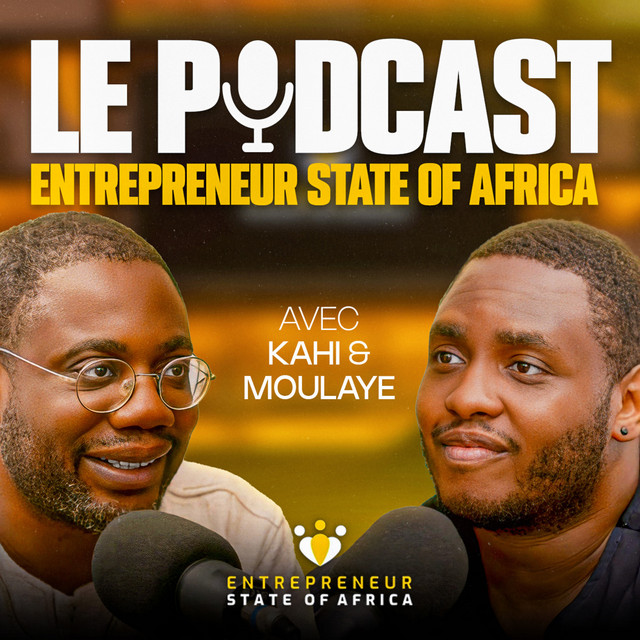
Kahi Lumumba, President of Totem Experience and co-founder of Entrepreneur State of Africa, likes to repeat that entrepreneurs—and even more so African entrepreneurs—spend long hours locked in their own minds, testing ideas, changing plans, doubting themselves, dreaming quietly… alone.
This time for introspection is necessary, but it can become stifling. That's where the idea for the Entrepreneur State of Africa podcast came from: to create a space where these thoughts, doubts, and experiences become shared conversations.
Entrepreneur State of Africa invites leading figures in African entrepreneurship, the continent's "big names," not to recite a carefully crafted story, but to speak truthfully about their failures, pivots, strokes of luck, personal sacrifices, loneliness, but also pride and vision. We discover their journeys in all their complexity, a far cry from sugarcoated success stories.
This is one of the key points in Kahi Lumumba's vision: the podcast plays an almost therapeutic role, helping African entrepreneurs understand that they belong to a community of people who ask themselves the same questions, who experience the same family pressure, the same difficulties in accessing financing, and the same fatigue of having to constantly "prove" the viability of their projects. The podcast thus becomes a kind of large-scale discussion group, where everyone can identify with a sentence, a doubt, or a decision.
Today, around 200,000 people follow Entrepreneur State of Africa on various social media platforms, particularly through video and audio clips shared online. The podcast has around 3 million listens per month for some 150 episodes already published.
These data clearly show that there is an audience for long, in-depth, demanding formats, provided they offer value, consistency, and genuine proximity to the audience.
If the content is useful, sincere, and answers questions that few other media outlets take seriously (how to deal with failure? How to negotiate with an investor? How to survive five years of hardship before landing your first real contract?), then a loyal audience will build up, episode after episode.
Like everything Kahi Lumumba undertakes, Entrepreneur State of Africa is not just a series of podcasts: it is a community.
This approach has given rise to an original business model: some listeners are willing to pay for access to more than just content—they want a network, in-depth discussions, resources, and even opportunities. The podcast becomes a gateway to an ecosystem where ideas, contacts, advice, and sometimes deals are exchanged.
Entrepreneur State of Africa is also a laboratory. Everything learned there—about formats, audiences, community dynamics, subscription models—is reinvested in other projects within the Totem Experience group. The podcast thus serves as a full-scale testing ground: how to build a niche media outlet, how to make it a profitable product, how to create and animate an engaged community.
Ultimately, the story of Entrepreneur State of Africa shows two essential things. First, that African entrepreneurs are neither alone nor condemned to silence: as soon as they are given a voice, thousands of others identify with them. Second, there is indeed an African audience for demanding, long, in-depth content—provided it is regular, sincere, and valuable.