



The results of the September 2023–June 2024 wave of the AFRICASCOPE study are now available to subscribers.
Traditional indicators of cumulative audience and viewing time by country show fairly high stability in both radio and television, although there have been significant declines in viewing time in some countries.
RADIO:
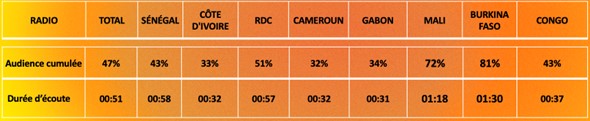
Radio fails to exceed an average of 50% across the eight countries studied.
Two countries, Burkina Faso and Mali, have scores well above average, as shown in the table below. In all other countries, radio consumption is low, with cumulative audiences and listening times down sharply compared to the same period a year ago.
TELEVISION:
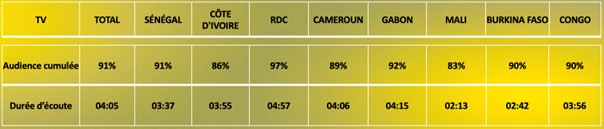
Television continues to achieve very high cumulative audience ratings but has lost 25 minutes in viewing time compared to the same period last year.
The DRC, Cameroon, and Gabon are the only countries where daily listening time remains above 4 hours.
In its press release, KANTAR also provides additional insight into the level of trust placed in traditional media for news and information:
When an event occurs in the country, 89% of those surveyed trust traditional media for information: 56% for television and 33% for radio. When it comes to international news, 65% reaffirm this trust, mainly for TV.
Managers and executives follow the same trends, with a more pronounced preference for public or international television channels. If they are looking for information on local news, they turn to radio and public media; if they want to find out about international news, they turn to television and international media.
Africascope is the benchmark radio and TV audience measurement in Sub-Saharan Africa. The study covers the capitals of eight countries (Senegal, Cameroon, Ivory Coast, Democratic Republic of Congo, Gabon, Mali, Burkina Faso, and Republic of Congo), representing more than 22 million individuals aged 15 and over. The interviews are conducted face-to-face on tablets with a total sample of 12,900 people, representative of the population aged 15 and over in the survey area.