


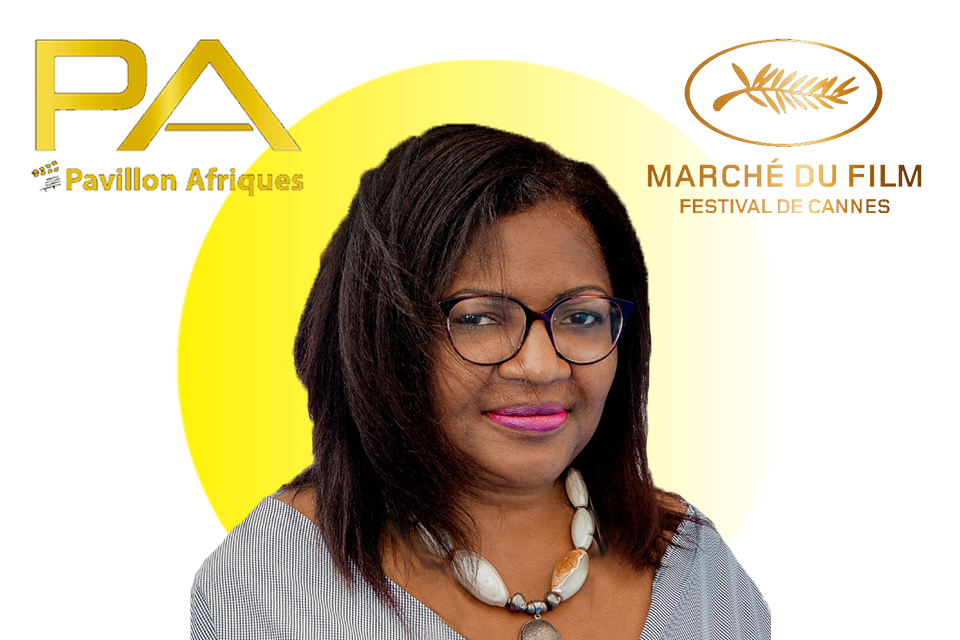
Comments gathered in CANNES by our correspondent Edouard CHAR
Karine Barclais is the founder of the Cannes Film Festival's Pavillon Afriques, a platform promoting African cinema and its diaspora, which is celebrating its fifth edition.
She launched this initiative in 2019 through her event and business development company registered in TOGO and agreed to provide ADWEKNOW with a review of this 5th edition.
Thanks to your Pavillon Afriques, the Cannes Film Festival has become a new meeting place for African professionals in recent years. What led you to create this pavilion?
It was just pure chance because I wasn't involved in the film industry at all. five years ago I knew absolutely nothing about it, and I did this first edition thanks to a combination of circumstances, and then I got caught up in it because I saw the need for it, the enthusiasm it generated right from the start, and I told myself that there was really something to be done, there are people to help, there is material… and here we are now in our fifth edition.
You told me that last year you had nearly 3,000 participants at the pavilion, which seems extraordinary to me, and this year you did even better. How would you describe this edition?
We did a little better this year. That includes people who follow us on social media and on our platform, but we had a few more people because, in fact, many people come back, which means they get something out of it because staying in Cannes for a few days is a real investment.
So if they come, if they come back, it means they're getting something out of it. Then they talk about it a lot to their friends, so there are people who come as delegations, those who show their films here, for example, they invite their friends, they come with the film crew, they come with the film's management, so immediately the numbers grow, especially since this year we've made a lot more films than usual.
So you are presenting films and at the same time organizing a series of lectures. How do you organize this series of lectures?
Well! I'm the only one who decides, so it's perfect—no one questions my choices.
In fact, I consult a lot, I talk a lot to filmmakers and ask them what they need, and I put together the program based on that. The Ministry of Foreign Affairs has been involved on two occasions, once via the French Embassy in Senegal, which presented a new program to help filmmakers, and then via the Special Envoy for Diasporas, Catherine Georges-Joseph, so we have some pretty specific things going on there. The OIF has also been involved in funding, and has been working with us for three or four years now. We have also had presentations on artificial intelligence with a masterclass on the subject, another on how we can help women,
In addition, we hold an annual event on co-production, which lasts a whole day because we really want to increase the number of co-productions between African filmmakers, American filmmakers, and perhaps filmmakers from the Caribbean as well. We also have a panel on distribution and another on financing.
In one year, France's situation in Africa has changed significantly. Has this affected your business?
No, I just do what I know how to do, which is bring people together. I've always done that throughout my life, but behind it all is the desire to see Africa develop and take control of its resources. Mining resources have been monopolized by other countries, and we mustn't let the same thing happen with culture, because that's the way things were heading. Culture is a resource like any other, and it's essential that governments realize this and protect this culture, just as we do in France.
I really admire the French model of protecting its culture for that reason.
Many African American actors, producers, and professionals come to the Africa Pavilion. This is surely no coincidence. How do you analyze this situation?
I simply believe that they feel at home here because they have a real desire for Africa, they want to return to their mother continent, they want to work with Africa. For example, there was Angela White, who screened her film Nine, a supernatural thriller starring Chris Attoh, who is very well known in Ghana. He is Ghanaian but now lives in LA.
There was also an American actress who told us that the first time she was supposed to go to Africa, her agent told her not to go: it doesn't pay well and you have to get vaccinations. But she said, "I'm going anyway," and it was the film she made in Africa that took her to Cannes. Right after the screening, a producer in the audience said to her, "I can see you in my next film." She's an Italian producer, so maybe she'll shoot a film in Italy. That's the kind of story I love and enjoy initiating.
So you offer opportunities to African filmmakers who come here looking for contracts, support, and assistance?
That's exactly right. People often say that the best thing about the Pavillon Afriques is the networking opportunities, which are incredible.
This morning, the UNESCO Assistant Director-General for Culture was there, and someone in the audience said to him, "It's good to see you up close because you're often so far away that we can't really talk to you, and now you're here," and they poured out everything they had on their minds about the way UNESCO works, which is absolutely incredible.
Last year there was an American woman who said that she would never have been able to meet the American financiers who were here with us in the United States; she would only have been able to deal with their assistants/secretaries, but here they are accessible and talk to everyone.
Given the situation in various African countries, would you say that you remain fairly optimistic about the development of cinema in Africa?
I believe that cinema will continue to develop regardless of the political situation. It is truly independent of the political situation in the sense that artists who have something to say will say it anyway, whatever the circumstances, even if politicians can help filmmakers to work in better conditions. But during this masterclass on economic intelligence, our speaker said that we had to create within the realities of our environment. According to him, in Africa, people are much more advanced in certain areas: we just need to stop trying to copy the Western model.
And I believe that if more people say that, we'll achieve something.