


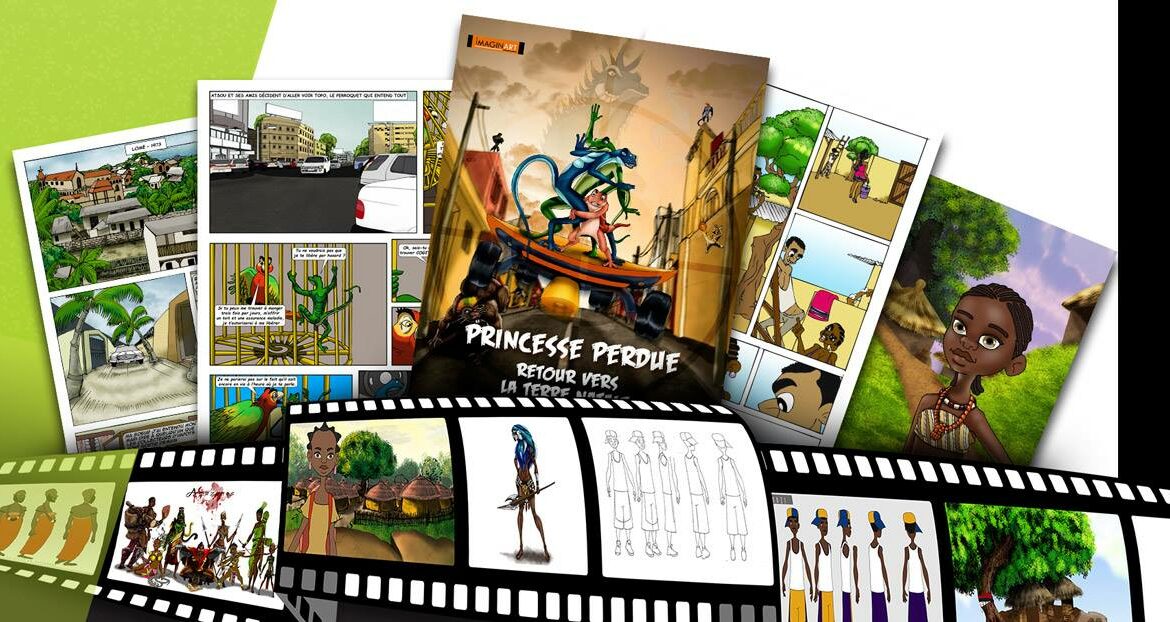
Article published in Le Figaro and selected by Adweknow
(Le Figaro with AFP)
In a working-class neighborhood of Lomé, the capital of Togo, the teams at the Aruka animation studio aim to reinvent African stories in order to show an image of their continent that bucks the clichés.
Cartoonists, editors, voice actors: sitting in front of their computers in a small room, a dozen young people are working on the next productions from this studio, which was
founded in 2017.Today, we want to show an Africa that creates, innovates, and participates in building the world, which is the opposite of the image of Africa as a place of famine and war,
" studio director Boris Kpadenou told AFP."As Africans, and especially as artists, we have a duty to be ambassadors for our continent. It's not just about wanting to show a good image, but about reflecting reality," he adds.
Aruka's productions, which are broadcast on YouTube and shown at festivals, can be inspired by everyday life, such as "La voix du bébé" (The Voice of the Baby), an animated film about pregnancy, or by traditions, such as "Wiyao," which deals with rites of passage into adulthood in northern Togo.
"This creativity comes from everything we've read, everything we've experienced, our own history, who our ancestors were, what they went through," confirms Emmanuel Yemey, lead 2D animator.Aruka attempts to "respond to a need, which is the lack of representation of African stories on screen, especially for children," explains its
director. "Animation begins with the script. Then, our job is to transform the text
into moving images," explains Mr. Yemey in front of his two screens.We choose the characters based on the descriptions in the script, looking for a certain originality to avoid plagiarizing other authors or studios," he explains.
The studio consists of three rooms, including a voice recording and editing room and another dedicated to drawing, with the necessary computer equipment to create a cartoon.
The studio is run by young student volunteers who are passionate about drawing and a few paid professionals, all aged between 20 and 27.
"We would like to have qualified staff, but there are no animation schools in Togo. So today we take on students who have the necessary drawing skills (…) and train them before putting them to work on projects," explains Boris Kpadenou.
Kadi Tchapo, a 22-year-old student, has several roles: she is the main voice actress for the series "Ma famille imparfaite" (My Imperfect Family), which she also colors.
"I love drawing and animation. I'm not a professional, but I'm learning a lot," she explains.
Funding remains a challenge for Aruka, which means "wise" in
the Ifè language of southern Togo.
"Our financial resources are limited because we don't receive any local or external subsidies. We don't have adequate equipment and there is a shortage of skilled labor. We don't even have a generator, even though we face frequent power cuts," laments Mr. Kpadenou.
The studio operates on its own funds, mainly from the income generated by the commercials it shoots. But its director remains cautious about subsidies from abroad. He has no intention of losing his identity. "In Africa in general, the films we make with external subsidies don't allow us the freedom to do what we want," he says. "What we're telling is no longer authentic. The script is watered down and doesn't really reflect our reality. It's a real struggle," he concludes.