


This week, we published a Moroccan study on successful communication strategies during Ramadan. Almost simultaneously, IPSOS published the 2025 edition of the Ramadan Handbook, which highlights in even greater detail the main trends and changes associated with this key period.
A month of spirituality and solidarity
According to the study, the spiritual dimension remains at the heart of Ramadan, cited by 40% of respondents as the element they appreciate most. Breaking the fast (Ndogou), a time for sharing with family, comes in second place (25%), followed by the importance of fasting itself (10%). Furthermore, 91% of Senegalese consider that Ramadan consists of engaging in acts of charity.
Impact on lifestyle: between fatigue and resilience
The report highlights that Ramadan affects the pace of daily life. Nearly half of Senegalese people sleep less, but this reduction in sleep does not necessarily lead to a decrease in their activity or productivity at work. In addition, 88% of those surveyed believe that Ramadan strengthens family ties, although 56% regret a weakening of the traditions of yesteryear.
Consumption: between discipline and excess
The study shows that 96% of Senegalese people prefer home-cooked meals. Breaking the fast almost always begins with dates (97%), followed by a single main dish (58%) or a variety of traditional dishes (44%). In addition, 65% of those surveyed make an effort to limit food waste.
In terms of finances, Ramadan leads to increased spending for 85% of households. To cope with this, 65% of Senegalese adopt a strategy of saving in advance. The majority prefer to shop in stores (97%), and 50% specifically wait for this period to take advantage of special offers.
The omnipresence of brands and advertising
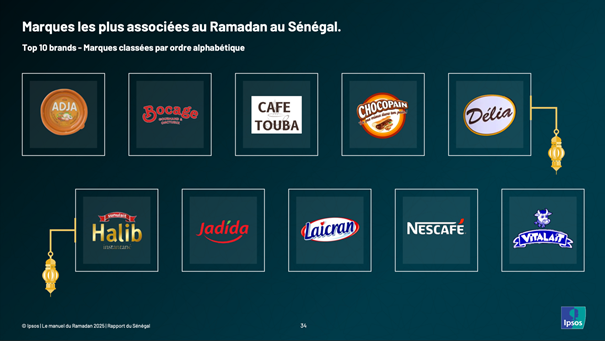
While Ramadan remains a time for reflection, it has also become a key period for advertisers. Television remains the main source of information about brands (44%), followed by stores (27%) and social media (15%). However, 87% of respondents believe that Ramadan is overly commercialized. Paradoxically, 73% remember the brands that advertise during this period, and 56% have already purchased a product influenced by an advertisement.
Five typical consumer profiles
The study distinguishes five profiles of Senegalese people during Ramadan:
- The Content Explorer (43%), who enjoys series and social media related to Ramadan. This profile tends to be female and has a low income.
- The Festive Spirit (23%), who makes it a point of honor to create a joyful and decorated atmosphere. This profile is also predominantly female but also older.
- The Passionate Buyer (17%), attracted by offers and lively markets, tends to be a young man with an average income.
- The Sociable (9%), focused on moments of sharing with family and friends, mainly male, of all ages.
- Those who take care of their bodies (8%), emphasizing dietary discipline and health. Here too, these are mainly men aged 25 to 34 with an average income.