


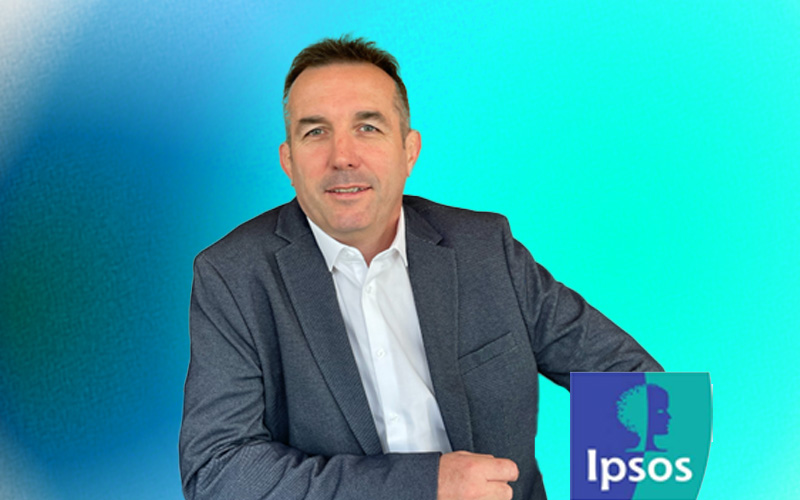
A few years ago, you founded Omedia with Christophe Gondry and Karim Konaté, and just under two years ago, Omedia was sold to IPSOS, which had closed its offices in 2000 at the time of COVID. What explains IPSOS's return?
Ipsos, which had offices until 2020, left Côte d'Ivoire and Senegal at the time of Covid, closing its offices. We, together with Omedia, maintained our presence and continued to serve our clients despite the challenges. This weighed heavily in their decision to rely on us to relaunch their business in French-speaking Africa, which represents enormous economic potential.
What does belonging to Ipsos bring you?
We benefit from more powerful technological tools and quality processes implemented by the group. This allows us to strengthen control, both in the field and in terms of data. Data is mainly processed in Senegal, but for very specific topics, we call on the group's experts. Ipsos has 20,000 employees worldwide, so there is always a specialist available.
What are your ambitions for the coming years?
Today, Ipsos in Africa has around 950 researchers spread across 14 countries, with large offices in South Africa, Kenya, and Egypt, and smaller structures in Senegal, Mozambique, Uganda, Zambia, and elsewhere. Our ambition is to really boost French-speaking West and Central Africa with local teams.
What are your main activities?
We are involved in media research such as advertising monitoring and audience measurement, but the bulk of our business consists of ad hoc studies that we conduct for our clients.
We conduct numerous satisfaction surveys, usage and attitude studies for consumer products, innovation with product testing, post-advertising testing, mystery shopping, etc.
Nevertheless, we believe that many decision-makers still rely on intuition and that there is a real need for education. That is why we conduct and publish certain studies free of charge, such as "Prediction," a predictive study on consumer trends that we conduct every year at the end of the year, and another on Ramadan, which highlights the trends and changes associated with this key period.
We will soon be publishing a third study of this type on purchasing behavior. The idea is to demonstrate the value of these studies so that companies invest more. We are also developing syndicated sector studies, particularly on finance (Financial Monitor) and technology (Tech Tracker). This is also a way of offering data at a reduced cost.
What consumer trends have you identified through these studies?
There are several, such as the growing importance of "buying local" and "cultural authenticity." But there are also insights that are often underestimated by international advertisers. For example, what we have called "collaborative consumption": refrigerators, washing machines, and other expensive equipment are often purchased jointly by several members of the same family or even by several families. Another trend is "multi-loyalty": consumers are not loyal to a single brand but to several, and adapt their purchases according to the context. They may drink Nescafé when entertaining friends, and Café Touba or a more economical brand on a daily basis.
These are very important insights that international brands need to take into account.
How do you collect data, particularly in countries where you do not have offices? Do you have local correspondents in each country?
One of the major challenges in Africa is data collection. What sets us apart is that in each of the countries where we operate, we always send someone on site to ensure secure data collection. One of the methods we have found is to systematically send a field manager, who recruits local investigators and supervisors, often locals, as there are inevitably different languages in each country or region. The field manager ensures quality through training, field monitoring, checks, and follow-up phone calls. The data is then sent back and processed in Senegal, where we carry out statistical analyses and produce reports.
This sets us apart from others who only subcontract. We always travel to the site to ensure the quality of the data collection.
We have chosen a model that prioritizes data quality and reliability.
Who are your main customers in French-speaking Africa?
We are multi-sectoral and have a wide variety of clients, but telecoms and major media advertisers are important, as are agri-food, banks, and international institutions.
How do you see the future of the education market in Africa?
I am optimistic. Despite the difficulties, there is an emerging middle class estimated at 350 million by 2030, a digital revolution, and above all, demographics that represent an opportunity: 60% of the ECOWAS population is under 25 years old. This creates huge markets for the future.
But local, cultural, and linguistic specificities must be taken into account. Thinking of "West Africa" as a homogeneous entity makes no sense. Hyperlocalization must take precedence.