


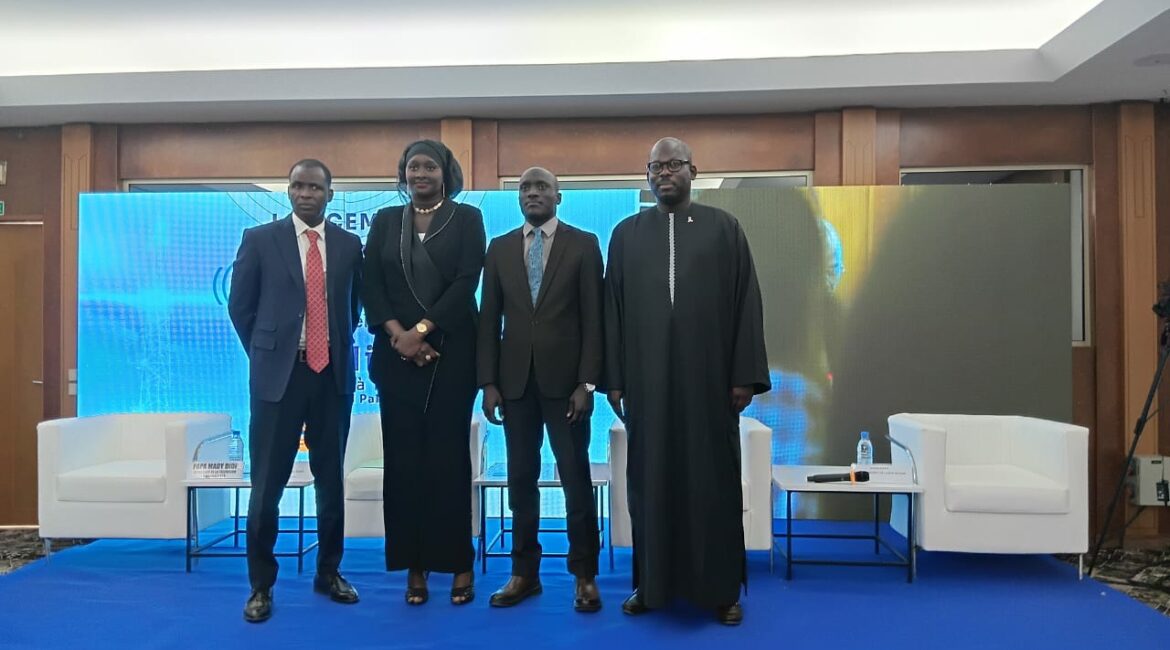
On November 25 and 26, 2025, Dakar will host the first edition of the African Broadcasting Forum, a unique continental gathering initiated by Télédiffusion du Sénégal (TDS).
Under the theme "DTT, a vector for development, sovereignty, and economic and social integration in Africa," this conference aims to reshape the vision of digital terrestrial television on the continent.
TDS Director General Aminata Sarr presented the forum as "a pan-African space for dialogue and innovation" designed to strengthen cooperation between states and rethink public broadcasting models in Africa.
The event will bring together regulators, public and private operators, technical partners, digital companies, and international experts to discuss key topics:
- the convergence between broadcasting and telecommunications,
- the opportunities offered by 5G broadcast,
- and the economic sustainability of television broadcasting models.
The forum will coincide with the 5th General Assembly of the African Television Broadcasters Network (ATBN), a symbolic recognition for TDS, the technical pillar of Senegal's audiovisual landscape.
This conference comes ten years after the launch of digital terrestrial television (DTT) in Senegal.
The country was one of the first in Africa to take the plunge, and the only one to do so without public funding, relying on a partnership with EXCAF Telecom that was considered innovative at the time.
But this choice, presented as visionary in 2014, ultimately slowed down the sector's development due to a lack of clear strategy, insufficient funding, and low public uptake.
The recent takeover of the network by TDS has not yet dispelled the uncertainties.
The state has now inherited a strategic but aging infrastructure that it did not finance and whose profitability—and even relevance—remain uncertain.
As if to measure the time lost, the representative of the Minister of Communication, Abibou Dia, praised "the bold work of modernizing the towers and transmitters," some of which are more than fifty years old.
For Aminata Sarr, the issue goes beyond technology: "Television broadcasting should no longer be seen as a mere relay, but as a lever for digital and cultural sovereignty."
Behind the rhetoric about digital sovereignty—cultural sovereignty is linked to content, not the mode of distribution—one question remains: what will be the real added value of DTT in the next 10 years, given that not all countries are at the same stage of deployment and that terrestrial television already faces strong competition throughout French-speaking Africa—particularly in Senegal—from satellite, operator boxes, and online platforms.