


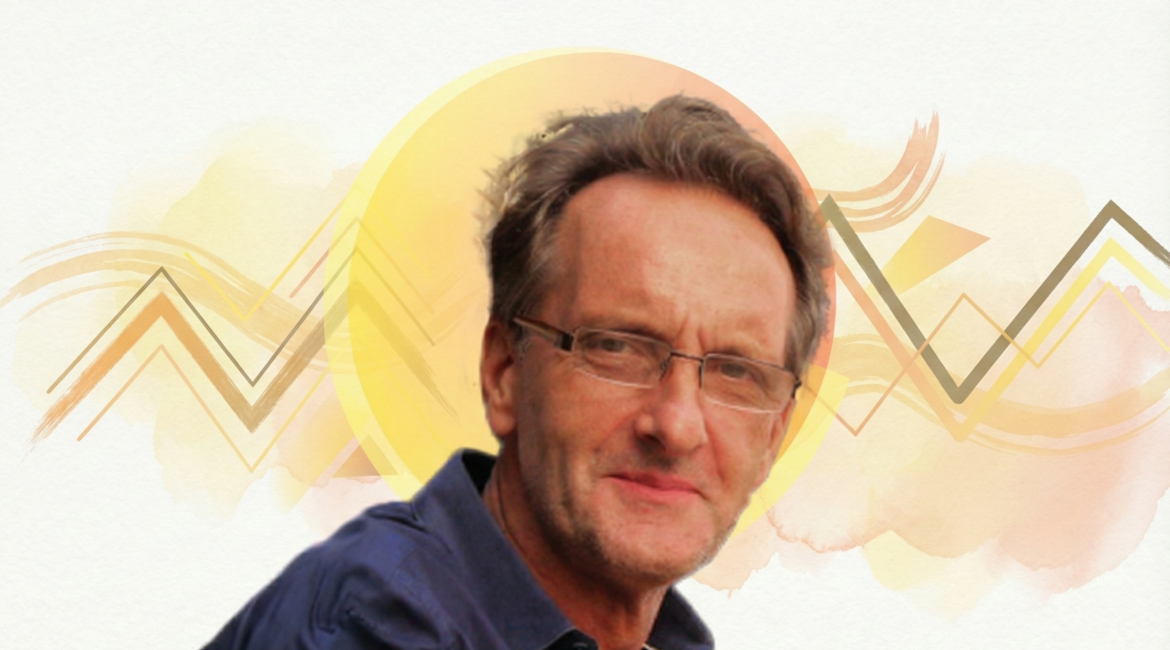
Meeting with the creative director of the "Dajé, Ànd, Gagner!" campaign, which has won several awards for its innovative approach.
The European Union has been active in Senegal for over 50 years. With the campaign "Dajé, Ànd, Gagner!" (meaning "meet, collaborate, and win"), the EU has worked with the agency AG Partners Dakar/Publicis to make a major break with the past: a new strategy, new formats, new faces, and a resolutely youthful tone.
To understand this transformation, we met with Olivier Marchetti, Creative Director, who—on behalf of the entire AG Partners team that worked on the project—discussed the project's origins, artistic choices, strategic challenges, and the unprecedented results achieved with the Senegalese public.
This campaign, which has won numerous awards, including the African Cristal Festival, Pitcher Festival, and LUUM Awards, can be viewed here:
What motivated the launch of this large-scale campaign?
The European Union had a real visibility problem. In a context where other countries are heavily involved in Senegal, it became important for the EU to remind people of its role and actions.
It was within the framework of the Global Gateway strategy that the decision was taken:
to move away from communicating on a project-by-project basis and start communicating about the European Union's partnership itself, its actions and its vision.
This was not the first time that a communications contract had been launched, but this one had a much greater ambition: to reach young people aged 15–35, who are the priority target audience.
What were the specific challenges in the Senegalese context?
We conducted very thorough qualitative and quantitative studies on perceptions of the European Union. This formed the basis for our work.
Many young people associate Europe with France, and France with Europe. With the rise of anti-French sentiment in recent years, this confusion had a direct impact on perceptions of the EU.
We therefore needed to clarify the situation: show what the EU really is, what it does, and above all how it benefits young Senegalese people.
How did you develop the creative strategy?
We made a complete break with the previous tone, both in form and substance.
We proposed stopping messages such as: "The European Union does this, finances that."
Instead, we sought out real beneficiaries who could tell their own stories of how an EU-supported project had changed their lives.
For example, in Ziguinchor, we met young people who had been trained in IT in Dakar. Like many young graduates, they had struggled a little in Dakar, but an EU project enabled them to return to Casamance, set up a farm, train themselves and create a new and truly fulfilling life.
Today, they earn more than they did in Dakar and are happy in their village.
These are the true stories that we have highlighted.
Were these elements recognized by the awards?
There are two levels: content and form.
Form is tone, aesthetics, urban culture.
In terms of form, we worked with Bilou XIV, a well-known beatmaker on the Senegalese rap scene, and with Tampidaro, a highly respected urban painter.
We created something very dynamic and snappy, unlike any other institutional communication. This is often what appealed to the juries that awarded us prizes.
And in terms of substance, what results have you achieved?
The bottom line is the choice of the actual beneficiaries, sincerity, and identification.
The results far exceeded our targets. For our digital campaign, we were aiming for around 25 million impressions; we achieved 104 million. This is unprecedented in Senegal.
We also conducted a post-campaign survey with KANTAR to gauge perception, and the results were spectacular:
Record engagement rates, up to 26%.
Attention measured at 95%*.
A "favorable impression" of the campaign at 99%*.
An improved perception of the EU among young people (83%*).
Which media did you use primarily?
We used television, but the core of the strategy was essentially digital and mainly social media, because that's where young people are, and Senegal is the digital powerhouse of West Africa.
We also worked with two very popular influencers: Doudou and Faynara.
They went to meet the beneficiaries, filmed 15- to 30-minute vlogs, and told their stories in depth.
This created an authentic dialogue, far removed from the traditional advertising format.
What made the implementation of this highly innovative project possible?
An agency alone can do nothing if the client doesn't follow suit.
In this case, there was a real symbiosis with the DUE team. They were aware of the limitations of their traditional communication and were willing to take risks, embrace modernity, and adopt a tone that often frightens advertisers.
As I said, we also conducted a lot of testing before and after the campaign: focus groups, pre-tests, post-tests… and the EU accepted what our private clients, who are focused on sales, are sometimes reluctant to fund.
Is this campaign likely to be replicated elsewhere?
Yes, it has already become a best practice for the European Union. The goal is to roll out this model—not the content, but the approach—in other countries where it operates.