


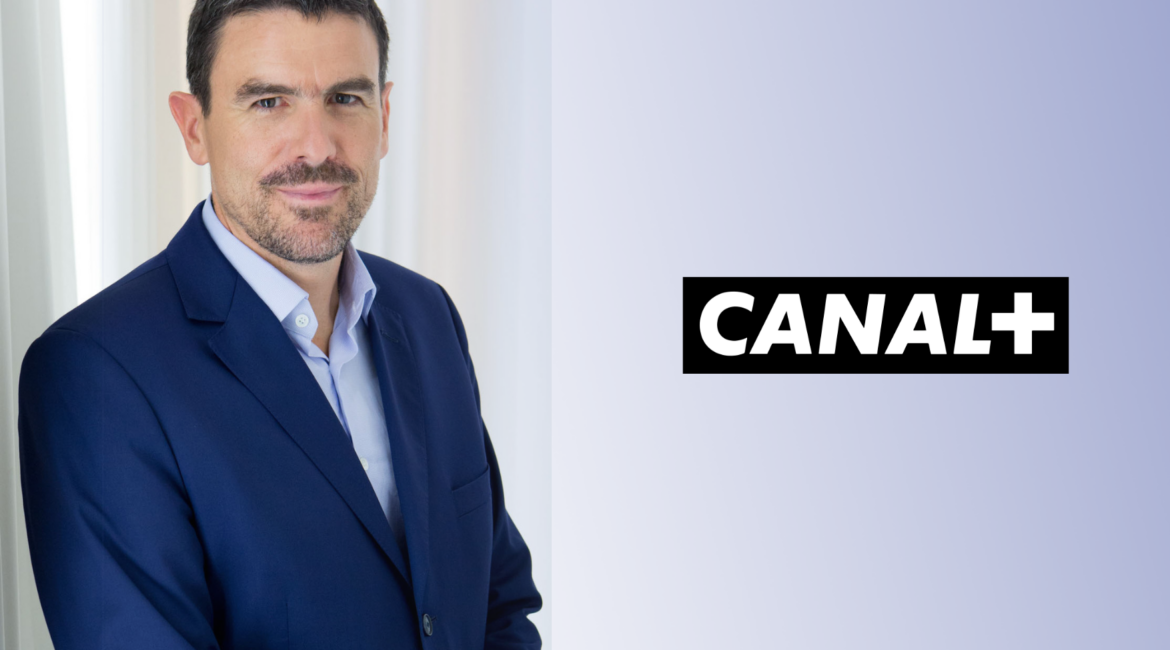
David Mignot, 50, is a graduate of the École Nationale Supérieure des Télécommunications and holds a Master's degree in Economics from Paris Dauphine University.
He began his career in 1996 at Bossard Consultants, a consulting firm specializing in the pay TV and telecommunications sectors.
Co-founder and CEO of Parabole Réunion from 1999 to 2008, David Mignot then joined the Outremer Telecom Group as Deputy CEO.
In 2011, David Mignot joined the Canal+ Group as Director of Operations for Africa, responsible for strategic planning. Since June 2013, he has been Managing Director for Africa at the Canal+ Group.
The Africa Cup of Nations has just begun, and you have gone to great lengths to ensure that your subscribers can watch all the matches in the best possible conditions. However, for the first time, all the matches will also be broadcast in each country on one or even two free national channels. How can this situation be explained?
Previously, "full" coverage of matches was the preserve of pay-TV operators, and there was a "free-to-air package" with a significant but limited number of matches, as it is not easy or always relevant for a free channel to purchase and broadcast all matches. In 2024, my understanding is that in Côte d'Ivoire, for example, both RTI and NCI will broadcast all matches.
For the 2023 Africa Cup of Nations, we had long since acquired the French-language pay-TV rights. New World TV recently acquired the pay-TV rights in other languages and the free-to-air rights in all languages. This allows New World TV to sell to free-to-air public and private African channels. For example, New World TV reportedly sold the pay-TV rights in Wolof to EXCAF in Senegal.
In Senegal and Cameroon, RTS, CRTV, and CANAL2 International will also broadcast all matches.
…We are all the more pleased to have been able to obtain these rights a few years ago on fair terms.
When it comes to competitions such as the World Cup, Euro Cup, or African Cup of Nations, we have long had a very open approach to the subject. We do not seek to be the sole broadcaster or to hold exclusive rights that we can then sell to other channels.
For us, it is important to be able to broadcast the entire game with our own editorial approach for our subscribers, but exclusivity is secondary.
We therefore decided to create our temporary channel CANAL+ CAN a year ago, given that Côte d'Ivoire, the host country, is an important country for us, and to offer the best editorial coverage we could to make it the "BEST CAN EVER." In Côte d'Ivoire, RTI has also put in place a very large operation, as has NCI. The quality of editorial coverage will be very high on these three channels, and it will be a real celebration of soccer in Ivory Coast, much to the delight of viewers.
However, in some countries, channels do not have the same level of resources to manage such an event, and in these countries CANAL has an important role to play.
Furthermore, given the reality of local advertising markets, I think it would be very difficult to recoup the investment—we're talking about €500,000 to €1.5 million per channel for the CAN rights—especially when advertising space is being sold so late in the game. The rights are therefore often "sponsored" by governments. Nevertheless, if they had been able to purchase these rights nine months in advance, most countries would probably have been able to make the event more profitable.
Given this increased competition, have you noticed any impact on subscription take-up at the start of this year?
Today, New World TV is positioning itself aggressively in the acquisition of sports rights in both French and English, seeking exclusivity. The 2022 World Cup, for which they obtained exclusive pay-TV rights, was their first major coup.
No. Subscription consumption during this period of holidays, celebrations, and soccer is high: a significant proportion of Ivorian households, for example, have an expanded television package (DTT, satellite, cable), and access to the competition is sufficiently accessible for people to want multiple ways of experiencing the event in order to enjoy a real soccer celebration.
Beyond what is happening with CAN 2023, does the arrival of New World TV pose a new threat to the CANAL+ Group, or does it mainly concern English-speaking operators?
There are several aspects to this issue: New World TV is a package of TV channels on a satellite (Eutelsat) that also offers many free channels, coupled with OTT distribution by telecom operators. It is not the first competitor we have had to face. We have also noticed that its arrival coincides with a decline in Startimes' aggressiveness in French-speaking areas.
So, of course, this is a serious competitive threat in terms of pressure on our subscriber base, but competition is normal and we are used to it. We were able to manage the situation with Startimes, and we will manage it with New World, just as we do with other competitors.
The African rights market is quite unique: for years, we have had competitors who do not pay for rights: pirates. In almost every country, there are players who happily broadcast major sporting events without having the rights to do so.
Previously, we avoided excessive bidding wars by keeping price intensity under control, even though competition was fierce due to piracy.
The new situation with New World TV is that we will continue to put pressure on the top line through piracy, which will continue and may even increase with the fragmentation of broadcasting rights, but this will also increase pressure on the cost structure of the market, both ours and theirs. This is a new strategic situation.
One question that remains unanswered about this emerging player is the mystery surrounding its sources of funding. The truth will eventually come to light, but to date, no one seems to know the precise shareholding structure, nor the banks or other investment funds that support them. And yet the investments at stake in the current calls for tenders amount to hundreds of millions of euros.
New World has announced that it also has the rights to the CAN for 2025. What about the CANAL+ group?
We have already negotiated the pay-TV rights for the 2025 Africa Cup of Nations, which, like the 2023 Africa Cup of Nations, will be broadcast on CANAL+. We will probably retain the principle of a dedicated event channel, "CANAL+ CAN," as this format seems to work well for this type of competition.
Outside of French-speaking Africa, you have steadily increased your stake in Multichoice. What strategic objectives does this serve?
Multichoice is a player we have known for a long time. In the past, there was never an opportunity to acquire a stake in the company, which was only listed on the stock exchange very recently, just before COVID.
During COVID, operator values fell significantly, and we saw this as a real opportunity to acquire a stake in an asset that had been greatly undervalued by the Johannesburg Stock Exchange. We believe in the audiovisual sector and we believe in its development on the African continent.
Beyond the financial opportunity, there is a fairly obvious strategic interest in consolidating cooperation between the two companies: they are completely complementary in geographical terms, they have very similar strategic frameworks, and they face similar threats such as piracy and the arrival of American platforms with considerable resources. We therefore have an objective interest in strengthening collaboration in the areas of series production, sports rights purchasing, channel publishing, etc.
Example: we acquired Iroko's content business in 2019 and now publish six channels, four of which are under the ROK brand: two channels, ROK 1 and ROK 2, for Multichoice; ROK Gh, broadcast in Ghana; ROK for the African diaspora package on Sky; and two channels for CANAL+: Nollywood and Nollywood Epic, which enables us to secure the production and distribution of Nollywood content.
Another example: generally speaking, local languages extend beyond the borders of traditional English- and French-speaking areas. It therefore seems to me that it would be beneficial to co-produce programs in local languages as well. (Swahili, Fulani, and Hausa are spoken in areas covered by both CANAL+ and Multichoice). And then everyone can create their own channels and offerings.
Canal produces 4,000 hours of African content annually, while Multichoice produces 6,000 hours, which in a few years will give them a powerful competitive edge over digital platforms, particularly those in the United States.
This threat from platforms still seems distant, particularly in French-speaking Africa. When do you see it becoming a reality?
American platforms will need to seek growth at some point and define a dedicated strategic plan for the African continent. We need to be ready when that time comes.
Africa has 50 countries and 1.2 billion inhabitants, and when you dig deeper, you realize that it is not a cultural or linguistic monolith and that you have to make an effort to adapt to fragmentation, languages, etc.
Historically, Netflix, for example, was able to grow by leveraging two developments in their traditional DVD rental ecosystem: broadband and payment methods such as credit cards and PayPal.
In reality, in Africa, there were barriers to entry for platforms. None of them are insurmountable, but it remains complicated.
As a result, data costs remain high in many countries, which is incompatible with an "unlimited" model, and cash collection, which did not exist a few years ago, is growing. These two obstacles to the platform model exist but will gradually disappear.
A third obstacle relates to content and language diversity. Overcoming this requires considerable effort and time.
The fourth obstacle concerns the specificities of setting up companies in different countries: tax rules are becoming stricter almost everywhere. It is no longer possible to collect revenue in a country without some form of establishment in that country. It is no longer possible to sell a subscription and collect VAT without paying it back. Some will hesitate because it is a very particular business climate, highly fragmented and characterized by economic and political instability.
We don't know if the platforms will go ahead with it or not, or in what form or when, but we are reasoning that it will happen and that we need to be ready for when it does.
We were talking about political instability. Have the events affecting the Sahel countries had an impact on your business activity?
On this subject, there are two levels of response: the reaction of consumers and that of institutions.
As far as consumers are concerned, we have not noticed any decline in activity in Mali, Niger, or Burkina Faso. There have been no impacts other than those related to the closure of banks and difficulties in getting around. On the contrary, our barometers show that satisfaction ratings and subscription intentions are highest in the Sahel, and there is a reason for this: in a climate of insecurity, where it is difficult to travel, subscribing to expanded TV is often the main form of entertainment.
We did not sense any anti-Canal sentiment because there is no association or conflation between CANAL and France among the population.
For institutions, things can be more complicated. Initially, there were tensions because we are effectively perceived as representing French interests.
Nevertheless, once we had got past this initial phase, during which we explained that we were entertainment retailers with an Afro-optimistic editorial line—talent from Africa, + from Africa , success stories—without news or reporting—the institutions in these countries realized that CANAL was the country's leading entertainment hub, that it was available in a significant number of households, was a good tax collector and payer, developed local employment and interests, and had long been broadcasting all national radio and TV media on its packages, which constitute a large part of the audience.
Today we feel rather reassured.
The advertising market in Africa does not seem very dynamic at the moment, except perhaps in Senegal. What can CANAL do to change things?
When comparing French-speaking Africa to other comparable regions of the world, there appears to be a gap between economic reality and the development of the advertising market.
It is clear that in many countries, the advertising market is undervalued.
The question is therefore: how can we work sectorally to promote the TV advertising market, as it is one of the main sources of funding for local audiovisual media?
We remain very cautious about our development in local markets so as not to affect ecosystems that are already fragile. We prefer to focus on pan-African advertisers because for us the stakes are low, whereas for local channels they are vital.
The number of channels broadcast by CANAL+ is steadily increasing. How will you manage this abundance to improve clarity for your subscribers?
The number of channels is linked to the number of countries we cover: there are around 15 channels per country, which means that for our 20 countries, there are already 250 to 300 local channels. Following what we have done in Côte d'Ivoire, we now have the technological means to offer different service plans for each country. It is not easy, and we are the only ones to have done it to date.
The logic is that we should do this everywhere in Africa.
When is the deadline?
Within 24 to 30 months, I think, we will have completed the technical stabilization and, in each country, there will be a numbering system with national DTT channels at the beginning, followed by CANAL channels and then other national channels from other countries, even though there will still be a total of 500 channels and services in each country.