


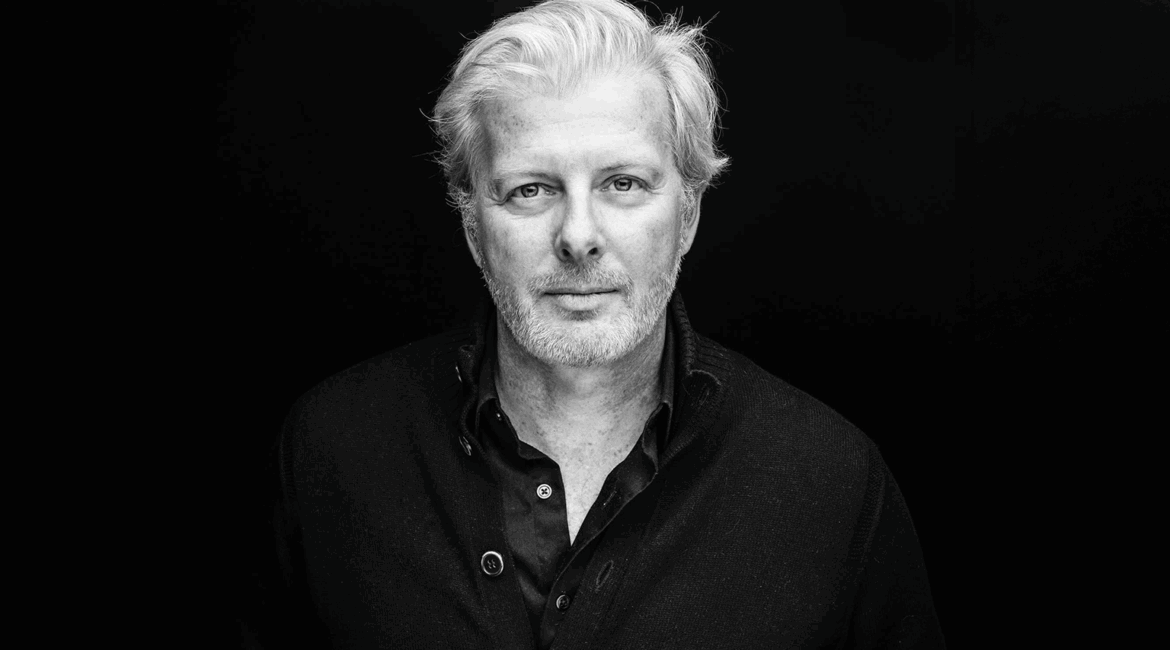
André AGID defines himself as a digital and media entrepreneur.
After graduating from Sciences Po Paris in 1996 (Ecofi), and following a period of cooperation in Lebanon, he founded the GAYA agency in 2002. He took over as CEO of Telesud between 2020 and 2022. After acquiring the Archriss agency in 2023, he took over and relaunched Telesud in February 2024.
You took over the Télésud channel a little over a year ago. What have you kept from the old structure?
I had already managed Télésud between 2020 and 2022 and was actively working on a new project when the channel was put up for sale. The channel, which had been in existence for 25 years, enjoyed a certain reputation both on the African continent and within the diaspora. It was therefore strategic, at least initially, to capitalize on this recognition. Today, the channel is called Global Africa Télésud, and we want to become the leading media outlet for Africa and its diasporas by offering quality content on politics, culture, business, and entertainment.
I would like to be able to roll out this brand on a regional or national scale—perhaps tomorrow Global Togo, Global Chad, or Global Senegal. I want to develop a strategy of scalable and consistent brands.
It should also be noted that even before the official takeover, I was personally financing the transmission of the signal. Without this intervention, the channel would have ceased broadcasting. It never interrupted its distribution and was thus saved.
Where is it distributed today?
We are available on Canal+ (channel 45) and StarTimes (channel 683) in Africa. In France, the channel is available via Free (channel 218) and, for the past two weeks, via Bouygues (channel 703). We are in advanced discussions with SFR and Orange. The goal is clear: to be available for free everywhere. In addition, we have formed partnerships with operators to feature on their apps. This is already the case with Digital Virgo.
This is strategically important: distribution via digital applications generates revenue for our distributors, particularly through the sale of data in Africa. Today, our main sources of revenue are therefore digital distribution in Africa (with partners such as Digital Virgo) and YouTube.
What are your other sources of funding?
To date, I have been financing the business entirely from my own funds. The market is not yet structured. I am considering setting up a framework to attract pan-African and international advertisers in partnership with other players who would have the same interest. We do not receive any subsidies or public aid, which guarantees our total editorial independence from African states and political parties.
That said, we do not rule out working with tourism ministries or investment agencies on an ad hoc basis. What we do refuse, however, is political funding intended to influence our editorial line. If we ever produce content for third parties, this will be clearly indicated.
Where are your programs produced, and what are the channel's flagship programs?
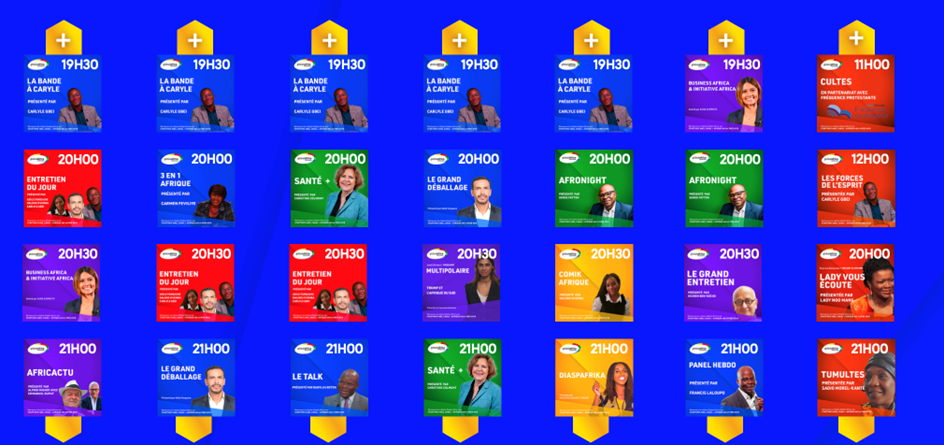
Our programs are produced in Paris and Cotonou. Our main daily show, "La bande à Carlyle," is hosted by Carlyle GBEI and airs every day at 7:30 p.m. More broadly, the 7:30–10:00 p.m. slot is reserved for our daily fresh programs.
Are there also hourly news bulletins like on other rolling news channels?
We considered broadcasting news bulletins every hour, which we trialed between 2020 and 2022. However, this required too many resources. We are considering revisiting this idea in September, provided we have established a reliable network of local partners to produce the reports.
How do you plan to structure this production network?
My goal is to build a coalition of media partners in every African country. The idea is to partner with recognized national players, such as Canal 2 in Cameroon, provided they are pluralistic and reasonably independent.
We don't see you much on social media yet. What is your digital strategy?
For the moment, our presence on social media is focused on promoting our programs. But we are preparing to launch a truly pan-African digital information platform in the form of an ambitious website.
Our priorities over the past 15 months have been to strengthen and expand our distribution (particularly via Bouygues and Digital Virgo) and to completely overhaul our programming schedule and content, with a ramp-up since October. Our next steps are to monetize our content and raise our profile by strengthening our digital strategy.
We have seen strong growth on YouTube thanks to the exposure of our content: in March 2024, we had 27,000 subscribers; today, we have more than 130,000, with particularly strong growth since last November.
We have also started communicating, with a few press releases, and you are actually the first person I am giving an interview to. I will be giving another one to News African Magazine next week. We feel that the time has come to "come out of the woodwork" because we now have something to say.
You mention a streamlined and innovative technological approach. Could you elaborate on that?
Our strength lies in our agility. We use the most modern tools to build a cost-controlled chain. We have had discussions in Chad and Mali with partners interested in this approach. I have someone on my team who is dedicated exclusively to new technologies, including artificial intelligence. This allows us to experiment on a daily basis.
Unlike established operators, we have no technological debt. We are starting from a sound foundation, with a lean but efficient structure. I can also rely on my agency GAYA, which specializes in digital platforms. Without this synergy, a much larger budget would have been needed to launch and run the channel.