


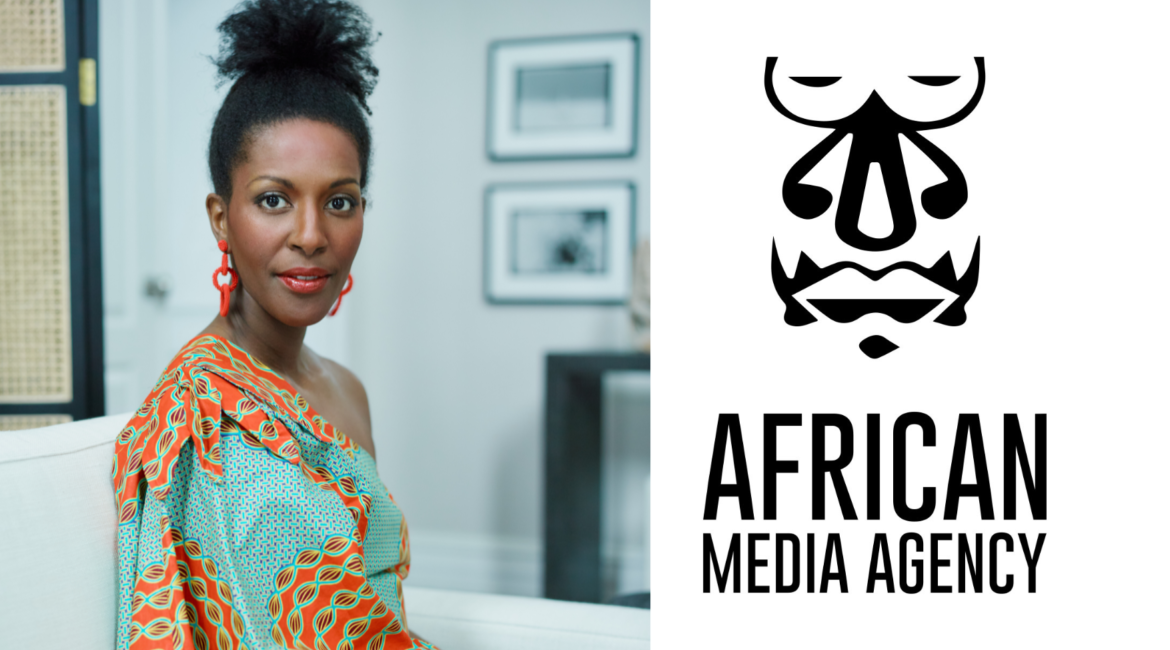
Eloïne Barry is the founder and CEO of African Media Agency, which was established nine years ago with a core business of distributing press releases in Africa via wire services.
Can you tell us about your agency's activities?
At that time, the agency was working with other agencies that had contacts in certain African countries but wanted to communicate in others. We started with broadcasting, which still accounts for 70% of our turnover, then we developed 360° agency activities: from digital to strategy, including content writing, press relations, and events. Finally, we also expanded into training.
From a geographical perspective, we have offices located in New York, Abidjan, Kampala, and a local presence in 18 African countries.
How do your training activities translate into practice?
We created the AMA Academy to train journalists on specific topics. Journalists on the continent do not necessarily have the means to receive regular training, and the training that does exist is not necessarily adapted to cultural specificities and local realities. To address this, we are forming partnerships with clients. We are currently providing training on genetic modification of mosquitoes to eradicate malaria. We are also developing modules on Fintech topics and investigative journalism.
Who are your customers?
We support clients such as the World Bank, the African Development Bank, international organizations, the US Department of State through its embassies, major foundations, and private actors such as Mastercard and LG.
Why did you choose to settle in Abidjan?
I am now based in Abidjan with the ambition of developing our activities in the French-speaking sub-region to help local companies with their communications.
What are the major trends in PR and communications in French-speaking Africa today?
You could say that there is a "before" and "after" Covid. First, the Covid year was the busiest year in terms of activity. This period was marked by the proliferation of opinion leaders. It served as an anchor point for communication. Sometimes very well, sometimes less so. This generated a lot of demand for communication. Secondly, it can be said that the Covid year created a real earthquake in the continent's media landscape. The lines between digital and traditional PR have become blurred. Today, what strikes me in Abidjan is that all communication agencies appear to be advertising agencies. However, these are very different professions, even if players need to diversify and adapt their offerings to the content creators who are emerging in the digital world. This makes our job more complicated. Today, content is multiplying, we are focusing more on "noise" than on targets, and this is certainly transforming our professions.
Digital technology is becoming essential, but not all digital approaches are equal.
What is your view of the public relations sector in Côte d'Ivoire?
I think this is a sector that needs investment. I see the media as part of society's infrastructure. It's part of what makes a society function properly. You need strong, reliable media for a healthy society. I meet a lot of dedicated professionals here who are committed to doing their job well, but the lack of investment in the media structure is a real problem. This is precisely why we are seeing a proliferation of opinion leaders on social media. We need to ask ourselves the right questions, because how can we convince Generation Z that the content disseminated in the media is of better quality, more reliable, and the result of investigative work, unlike the content poured out via feeds?
The media must take up more space on social networks and capture these audiences in a much more relevant, intelligent, and sustainable way. There is a need to revitalize print media with digital technology.
Do you think that today we need to talk about Public Relations 2.0 as opposed to traditional PR?
I don't see any break between the two. The impact generated by a digital campaign or an interview in a powerful media outlet is not comparable. PR remains a field of expertise. It is certainly evolving in terms of formats, but there is no break.
Short-, medium-, or long-term projects?
We do indeed have a project to create a media incubator for the French-speaking sub-region, based in Côte d'Ivoire. The aim would be to train local journalists, but also to support journalists who would like to set up their own media outlets.
We have also developed a platform for distributing press releases to Ivorian companies with specific rates.