


With over a billion inhabitants and overall growth on the rise, sub-Saharan Africa is a land of opportunity for international brands. It is also a diverse sub-region, rich in variety. Faced with such a vast market, many international groups have taken an interest in its potential through numerous subsidiaries.
Despite the notable presence of these international brands in various sectors, products made in Africa are on the rise. National and regional champions are competing directly with the biggest brands, leveraging their knowledge of the field and the specificities of different markets.
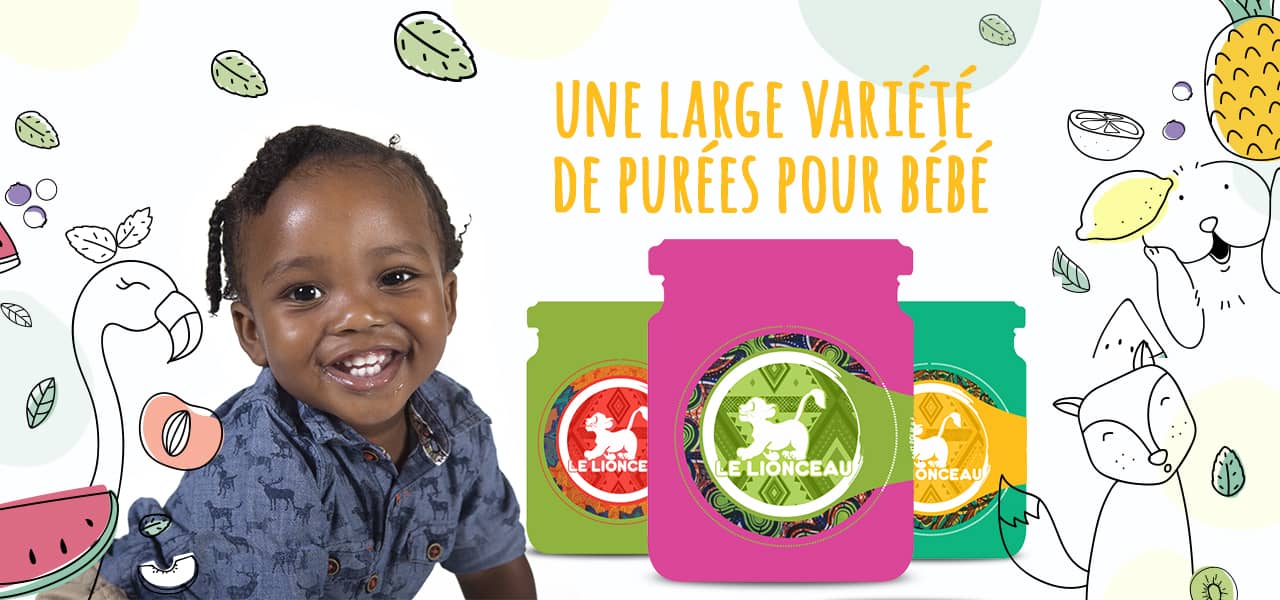
This is the case with the young brand "Le Lionceau," launched in 2018 in Senegal by Siny Samba. This former employee of Blédina, the discreet subsidiary of the Danone group, chose to launch an alternative to imported baby food sold in supermarkets in the country. She created the Le Lionceau brand of baby products to offer young mothers a healthier and more local range, adapted to the consumption habits of Senegalese people.
In terms of distribution, the young brand initially focused on direct sales, but now its products are available in around 50 outlets (pharmacies, grocery stores, and supermarkets).
However, in this emerging competition, advertising and marketing remain crucial for brands that want to survive in their market, even though international groups generally have larger budgets for communication.
According to Siny Samba, co-founder of the Le Lionceau brand: "To contribute to our development and grow our brand, we relied on a community of mothers. This community enabled us to fully understand the expectations and needs of our target audience through exchanges, advice, and feedback on the products launched by our brand. This also enabled us to establish a relationship of trust with our target audience. We were able to develop this community through social media…"
And it is thanks to the rise of digital technology on the continent that these local brands are managing to carve out a place for themselves among their competitors. Indeed, more and more consumers are influenced by their online experience through e-commerce, blogs, and social media. Some local players have therefore chosen to capitalize on digital technology to establish themselves and begin a phase of growth.
"Our digital community now brings together true ambassadors for our brand. They contribute significantly to the development of our reputation. " "In my opinion, digital has become essential. On the one hand, to capture audiences that are spending less and less time watching television, and on the other hand, because advertising in traditional media is much more expensive. Digital also has the advantage of being able to create a real relationship of proximity with its audience," says the young entrepreneur.
Le Lionceau is currently preparing a special digital campaign to cover the Ramadan period, which is a prolific time for communication and marketing in Senegal. With a sharp increase in food consumption and an explosion in media audiences, the month of Ramadan represents a strategic opportunity for brands, which are stepping up their efforts to attract consumers' attention by deploying special campaigns, particularly in the digital sphere.