


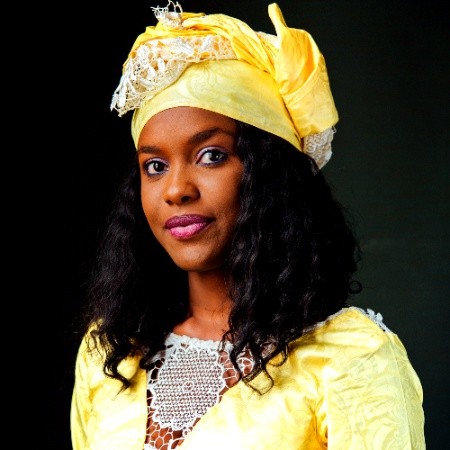
What is your experience with baby food?
I had the opportunity to work at Blédina, where I specialized in everything related to infant nutrition. Originally from Senegal, I quickly realized that the only baby products available in the country were imported. So I decided to launch my own brand with a range of products made from our agricultural resources. The mothers I met during this period felt the need for locally made products that were adapted to local consumption habits for feeding their children.
That's how we launched the Le Lionceau brand to promote local raw materials and improve baby feeding conditions. Today, our brand has evolved considerably: we have a team of 25 people and have greatly expanded our product range (to around 20 products).
We have also evolved considerably in terms of distribution. When we started out, we focused on direct sales in order to maintain a special relationship with consumers. Today, we are diversifying into other channels in collaboration with supermarkets, pharmacies, and grocery stores (around 50 points of sale).
How did you manage to establish yourself against international brands that have historically been present in Senegal?
To contribute to our development and grow our brand, we relied on a community of mothers. This community allowed us to fully understand the expectations and needs of our target audience through exchanges, advice, and feedback on the products launched by our brand. Thanks to this, we have also managed to establish a relationship of trust with our target audience.
We were able to develop this community through social media. We chose Facebook to attract, retain, and develop this community of mothers interested in our products. We continued with WhatsApp to facilitate interactions and WhatsApp Business to publish our catalogs online.
How do you communicate? Through traditional media or more through digital channels?
Today, we work hand in hand with a digital agency for all our communications. Every two months, we allocate a budget to develop sponsored campaigns on Facebook and Instagram, as well as on WhatsApp and our website.
We don't invest in traditional media because it's relatively expensive and, to reach an audience like ours, social media is more relevant as smartphone and internet penetration rates are growing in Senegal and the sub-region. Of course, traditional media remains widely popular. We are also in contact with agencies to broadcast advertising via TV series.
Can advertisers do without digital media?
In my opinion, digital has become essential. On the one hand, to capture audiences that are spending less and less time watching television, and on the other hand, because advertising in traditional media is much more expensive. With 10K or 20K CFA francs, you can now run a good digital campaign. Finally, digital has the advantage of being able to create a real relationship of proximity with your audience.
As a local brand, has digital technology enabled you to stand out from the international competition?
Absolutely. Digital has allowed us to establish ourselves locally and develop a target community. Our community, built on digital, now brings together true ambassadors for our brand. They contribute greatly to the development of our reputation.
Ramadan is a very dynamic period from an advertising perspective. Will you also be taking advantage of this period to communicate?
Yes, indeed. Ramadan is an important period in terms of communication and advertising. Many people go to supermarkets to shop and make a lot of purchases. We will therefore develop a special in-store campaign and also strengthen our digital communication through advertising campaigns.